Choosing the right wireless electric dog fence helps keep pets safe while preserving outdoor freedom. This guide reviews five top options, highlighting coverage, correction methods, durability, and suitability for different yard sizes and dog weights. The selections include GPS-based systems for large areas and traditional radio-frequency fences for smaller spaces. Each product section covers core features to help American dog owners compare options quickly and confidently.
Product Comparison at a Glance
| Product | Coverage | Correction | Best For |
|---|---|---|---|
| PetSafe Stay & Play Wireless Fence for Stubborn Dogs | Up to 3/4 acre | 5 levels + tone-only | Stubborn, medium to large yards |
| VERSMELO GPS Wireless Dog Fence | 33 to 1999 yards radius | Sound, vibration, static (6 levels) | Very large outdoor spaces, farms |
| PetSafe Wireless Pet Containment System | Up to 1/2 acre | 5 levels + tone-only | Small to mid-size yards, travel-friendly |
| PetSafe Stay & Play 2-Dog Wireless Fence | Up to 3/4 acre | 5 levels + tone-only | Two-dog households, medium to large yards |
| Chtoocy GPS Wireless Dog Fence | 25–999 yards | Beep, vibration, static | Flexible, real-time tracking for varied spaces |
PetSafe Stay & Play Wireless Fence for Stubborn Dogs
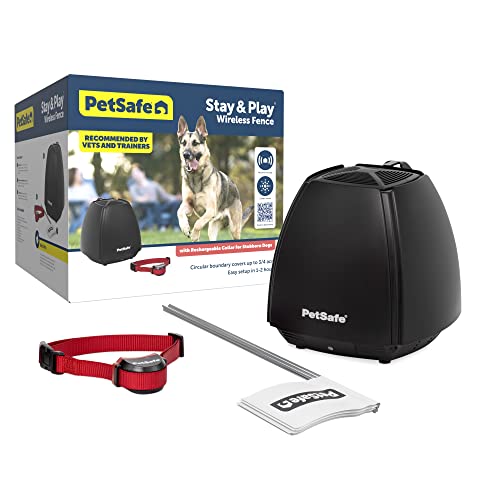
The Stay & Play system offers a lightweight, travel-friendly design with a circular boundary that covers up to 3/4 acre. Setup typically takes 1-2 hours, and no digging is required. It provides five adjustable correction levels, a tone-only training mode, and a static-free reentry option, which helps tailor training to a dog’s temperament. The waterproof receiver collar fits dogs at least 5 lb and offers neck sizes from 6 to 28 inches, making it suitable for a wide range of small to medium dogs.
VERSMELO GPS Wireless Dog Fence

VERSMELO combines GPS accuracy with an AI-based algorithm for reliable boundary enforcement. The system supports a radius from 33 to 1999 yards and up to 2,593 acres, making it suitable for farms and large properties. It offers a safe, gradual correction method—sound, vibration, and up to six levels of static—while automatically entering protection mode after repeated boundary violations to prevent overstimulation. This solution is best for expansive outdoor spaces where traditional RF fences are impractical.
PetSafe Wireless Pet Containment System

This original PetSafe wireless option creates a circular boundary up to 1/2 acre and is designed for portable use, ideal for travelers or smaller yards. It includes five correction levels plus a tone-only mode, with a waterproof, rechargeable receiver collar that fits dogs over six months old, weighing at least 8 pounds. Neck sizes range from 6 to 28 inches, accommodating many medium-sized dogs and those transitioning to a collar.
PetSafe Stay & Play 2-Dog Wireless Fence

Designed for households with two dogs, this system mirrors the single-dog Stay & Play features but supports a larger, shared boundary of up to 3/4 acre. It provides five correction levels, tone-only training, and static-free reentry. The waterproof receiver collars are suitable for dogs older than six months and at least 5 pounds, with adjustable neck sizes from 6 to 28 inches. It’s a practical solution for homes with multiple pets that require separate but coordinated boundaries.
PetSafe 2-Dog Wireless Pet Containment System

This two-dog version of the original PetSafe system offers similar setup and boundary concepts, enabling two dogs to share a yard with individual collars. With a circular boundary up to 1/2 acre, five correction levels, and tone-only mode, it provides a balanced approach for households needing multiple pet containment. The collars are waterproof and adjustable, catering to dogs at least six months old and weighing a minimum of 8 pounds.
Chtoocy GPS Wireless Dog Fence

Chtoocy’s GPS-based fence integrates a safe wireless boundary with a training collar and real-time distance visualization. The adjustable boundary range spans 25 to 999 yards, allowing flexible setup for various properties. The Swiss GPS chip on the strap’s back helps avoid signal loss in dense fur, and the system supports beep, vibration, and static corrections. It’s a versatile option for owners seeking real-time feedback and precise boundary control.
Buying Guide
Key considerations when selecting a wireless dog fence include property size, dog weight and temperament, and whether you prefer GPS-based or traditional radio-frequency (RF) boundaries. GPS fences excel in large, open spaces, farms, or multi-area properties where RF signals may be unreliable. RF-based systems; on the other hand, are often simpler to set up, economical, and effective for typical residential yards.
- Boundary size and adjustability: Ensure the system supports your yard or property scale, and that the boundary can be adjusted gradually to match your dog’s tolerance.
- Correction methods: Look for multiple levels of static correction, plus tone-only mode for training. Consider if vibration or beeps are sufficient before static correction.
- Collar comfort and durability: Waterproof, lightweight collars with adjustable neck sizes improve compliance, especially for dogs with longer coats or sensitive skin.
- Power and portability: Some systems are plug-in, others are battery-powered or rechargeable. For travel or seasonal use, a portable unit may be advantageous.
- GPS accuracy and reliability: GPS-based fences require clear satellite visibility; consider a model with an indoor/ outdoor performance profile and protection modes to avoid overstimulation.
- Multi-dog capability: If you have more than one dog, verify whether the system supports multiple collars and whether the boundary is shared or separate per dog.
- Durability and weather rating: Outdoor exposure demands weatherproof components and robust materials to withstand elements.
- Ease of installation: Quick setup without digging is a common benefit; some systems offer mobile portability for travel or temporary setups.
- App and data access: Some GPS systems provide a companion app, live tracking, and distance metrics, which adds value for monitoring and training.
Overall, align the choice with the dog’s size, energy level, and your property’s layout. For stubborn dogs or larger properties, GPS-based systems can provide scalable, reliable boundaries. For smaller yards or frequent travelers, traditional wireless fences offer a simpler, budget-friendly option with proven performance.