Treat puzzles for dogs offer mental stimulation, slow feeding, and interactive play. This guide highlights five top-rated options to help pups learn, stay engaged, and enjoy snacks in a structured way. Each product below supports problem-solving, reduces destructive behavior, and strengthens the bond between pet and owner.
Summary Table of Selected Products
| Product | Brand | Key Benefit | Difficulty Level |
|---|---|---|---|
| PETSTA Dog Puzzle Toys | PETSTA | Three difficulty designs with slow-feed dispenser | Medium to Hard |
| DR CATCH Dog Puzzle (Blue) | DR CATCH | Interactive puzzle for IQ and enrichment, slow-feeder | Medium |
| FOXMM Interactive Dog Treat Puzzle | FOXMM | Slider-based game with squeak, multiple steps | Medium |
| BSISUERM Dog Puzzle Toy | BSISUERM | Adjustable treat-dispense with intelligence training | Medium |
| Outward Hound Tornado | Outward Hound | Level 2 spinning layers for interactive play | Medium |
Petsta Dog Puzzle Toys
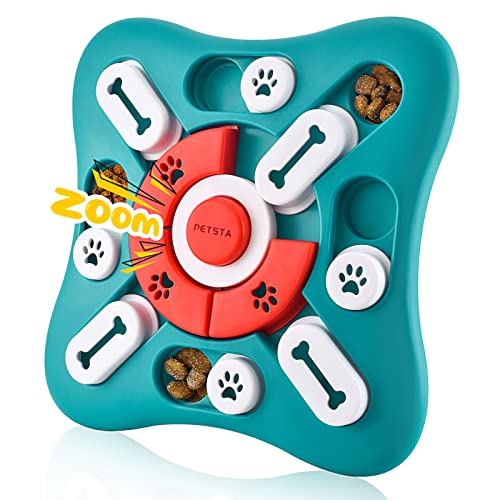
PETSTA’s puzzle toys combine a 10 by 10 inch play area with a 1.3 inch height for engaging treats. The center squeak button attracts dogs and cats, while three difficulty designs and a 16-hole dispenser encourage slow feeding for extended play time—often exceeding 20 minutes. The Spin & Slide along with Seek & Hide mechanics invite natural scenting and paw-search skills, rewarding correct moves with hidden food rewards. This multi-feature design supports brain training and enrichment beyond basic snacking.
DR CATCH Dog Puzzle (Blue)

This interactive puzzle measures approximately L9.44″ x W9.44″ x H1.14″, suitable for cats, puppies, and small dogs. It includes sliding components that release food and help improve eating pleasure and IQ. The design also functions as a slow-feeder, encouraging pets to eat more slowly for digestion and wellness. It serves as a close companion toy that provides mental engagement and stress relief during play.
FOXMM Interactive Dog Treat Puzzle Toys

FOXMM’s puzzle features a 10 inch by 10 inch by 1.2 inch footprint with a middle squeak. The slider-based mechanism challenges dogs to uncover treats through sequential steps, helping to increase cognitive engagement and problem-solving abilities. The squeak element adds auditory stimulation, potentially increasing motivation and engagement during interactive play. Suitable for a range of dog sizes seeking mental workouts and reward-driven play.
BSISUERM Dog Puzzle Toy

This adjustable treat-dispensing ball provides two spheres with controllable food-distribution switches, enabling customization for different dog sizes and dry-food types. As dogs push and chase the toy, food dispenses from holes on both sides, extending playtime. The design emphasizes intelligence training and hunting instinct, offering a strategic way to feed while boosting cognitive effort and concentration during interaction.
Outward Hound Tornado – Nina Ottosson

The Tornado is a Level 2 intermediate dog puzzle featuring three spinning layers for layered challenges. It’s designed for beginners to smart pups, offering about 15 minutes of brain-engaging play and proportional physical activity. The structure promotes problem-solving and interactive play, helping to keep dogs engaged and exercised while managing boredom.
Buying Guide: Key Considerations For Choosing Treat Puzzles
- Difficulty progression: Start with simpler puzzles and gradually increase complexity to match your dog’s learning pace.
- Size and safety: Ensure the toy fits your dog’s breed and chewing behavior; inspect for small parts that could be swallowed.
- Feeding goals: Choose puzzles that support slow feeding and portion control if your dog tends to eat quickly.
- Materials and durability: Look for sturdy, non-toxic plastics or rubber designed for frequent use and easy cleaning.
- Cleaning convenience: Prefer machines-washable parts or simple hand-wash designs to maintain hygiene between uses.
- Engagement factors: Puzzles with sounds, sliding mechanisms, and multiple steps typically sustain interest longer.
- Size variety: Some toys suit multiple dog sizes; others are better for small, medium, or large breeds specifically.
- Visual and scent cues: Puzzles that use scent-based rewards or visible treat placements can increase motivation.
- Maintenance and replacement parts: Check if parts can be replaced if worn or lost over time.
- Variety in play: Mixing different puzzle types (sliders, mazes, spin) can prevent boredom and enhance overall cognitive exercise.