This guide reviews top coconut chip substrates suitable for pythons and similar reptiles, focusing on moisture control, ease of use, and safety. Each option expands with water, reduces dust, and supports natural burrowing. Use this overview to compare substrates for ball pythons, other snakes, tortoises, and bearded dragons, ensuring a natural, comfortable, and hygienic terrarium environment.
| Product | Brand | Notes |
|---|---|---|
| Riare 2 Pack Natural Coconut Chip Substrate | Riare | Compressed coconut husk chips; expands with water; low-dust; humidity maintenance |
| ReptiChip Reptile Bedding Loose Coconut Chip 12 Quart | Reptichip Premium Coconut Substrate | Loose substrate; expand with water; dust-free; eco-friendly |
| Legigo 10LBS Coconut Chip Substrate | Legigo | 10 lb brick; high humidity retention; natural and safe |
| Riare 10LB Coconut Chip Substrate for Reptiles | Riare | 11.81×11.81×5.12 inch brick; expands to 72 quarts; odor absorption |
| Repti360 Premium Coconut Chip Substrate | Repti360 | 10 lb compressible block; expands to 72 quarts; versatile |
Riare 2 Pack Natural Coconut Chip Substrate

The Riare coconut chip substrate comes as a two-pack of natural coco husk chips designed for reptile and amphibian habitats. The chips are natural and organic, with a soft texture that supports burrowing and hiding behaviors without sharp edges. Easy to use—just add water to expand—these compressed bricks save space and simplify storage. They boast low dust, reducing respiratory irritation, and maintain humidity well, which is especially beneficial for tropical species. Each brick measures 8.2×4.1×2.2 inches, facilitating controlled bedding depth. Suitable for ball pythons, bearded dragons, tortoises, and frogs, this substrate aims to create a natural, cozy enclosure. Watering guidance suggests about 30 liters for desired humidity, with rehydration as needed.
ReptiChip Reptile Bedding Loose Coconut Chip 12 Quart

ReptiChip coconut substrate is a premium loose chip bedding designed for a broad range of reptile species. Intended for both dry and humid environments, it expands easily when water is added, increasing humidity for tropical setups. The product emphasizes cleanliness, with minimal dust and debris typical of lesser-quality substrates. It uses 100% organic coconut husk sourced with a focus on environmental sustainability. The chips mimic natural terrain, allowing snakes, tortoises, and lizards to engage in natural behaviors like digging and burrowing, while maintaining a clean terrarium environment with favorable odor control when impacted by waste and moisture.
Legigo Coconut Chip Substrate for Reptiles

Legigo offers a 10-pound coconut chip substrate brick designed for reptiles, including snakes and ball pythons, as well as tortoises. The substrate holds humidity and absorbs waste, contributing to a cleaner terrarium. It is made from 100% natural coconut husk, sustainable and biodegradable, with a fluffy texture that supports digging without sharp edges. The product’s moisture retention helps regulate the terrarium climate, reducing the frequency of substrate changes while maintaining a natural habitat aesthetic. It is suitable for spraying to rehydrate as needed and can be used across multiple enclosure types.
Riare 10LB Coconut Chip Substrate for Reptiles

This Riare 10-pound coconut chip substrate expands from a compact brick to a large 72-quart substrate volume. It uses coconut husk fibers to create a soft, non-abrasive bedding ideal for snakes, ball pythons, bearded dragons, geckos, and various lizards. The material is biodegradable and renewable, aligning with sustainable practices. Its moisture retention supports stable temperatures and humidity, helping to keep the terrarium environment consistent. The loose, textured surface encourages digging and natural behavior, while remaining gentle on delicate reptile skin. It is suitable for hibernation or breeding scenarios and is designed for easy expansion and long-lasting use.
Repti360 Premium Coconut Chip Substrate

Repti360 offers a premium coconut chip substrate designed to support a variety of reptile habitats, including ball pythons, bearded dragons, leopard geckos, and tortoises. This substrate starts as a 10-pound compressed block and expands to 72 quarts of loose chips. It emphasizes humidity retention, helping maintain tropical microclimates essential for reptile health. The bedding’s natural coconut husk composition provides a soft, safe medium that allows burrowing and comfortable movement. Its versatility makes it suitable for multiple species, aquatically or terrestrially, including amphibians and invertebrates when used appropriately.
ReptiChip Reptile Substrate Coconut Chip Bedding 72 Quart

ReptiChip coconut substrate is a 72-quart compressed product that expands into a large volume of safe bedding. The 10-pound equivalent expands to provide a soft, breathable substrate that helps maintain high humidity and support a tropical ecosystem within reptile enclosures. It emphasizes odor control through moisture management and fiber composition. This substrate is appropriate for ball pythons, leopard geckos, turtles, tortoises, and other reptiles requiring a stable, naturalistic habitat with easy expansion and less dust than some alternatives.
Halatool Reptile Substrate Clay Pebbles
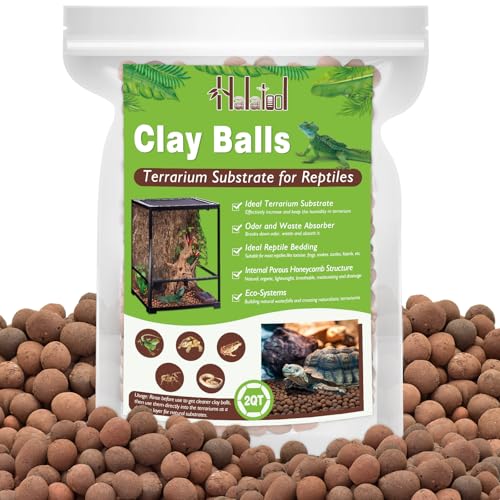
Halatool provides a clay-based substrate option featuring expanded clay balls suitable as a substrate and drainage layer. This product comes in 2-quart expanded clay balls and serves as both bedding and a drainage medium for terrariums and vivariums. Made from 100% natural clay, it is stable, non-decomposing, and free of harmful substances. The internal pores promote aeration and efficient drainage, helping to prevent waterlogging. While primarily used as a drainage layer, Halatool can complement a substrate mix by improving substrate structure and lifecycle within a terrarium housing snakes or other reptiles.
ZeeDix Coconut Husk Chip Substrate

ZeeDix offers 10 pounds of compressed coconut husk chips that expand into loose chips designed for reptile habitats. The product emphasizes natural, organic materials that are dust-free and compostable. Its chips promote balanced humidity and provide a clean living environment by absorbing liquids and odors. The expanded chips range from small to larger sizes, suitable for snakes, tortoises, geckos, and other reptiles needing a natural substrate with good moisture management. The packaging supports sustainable disposal and reuse across compatible terrarium systems.
Buying Guide: Key Purchase Considerations
- Humidity and moisture management: Look for substrates that retain humidity without becoming moldy. Compressed bricks that expand with water are convenient, but ensure you can control moisture to suit tropical, arid, or temperate setups.
- Dust reduction and safety: Dust-free or low-dust options help protect respiratory health. Avoid sharp fragments that could injure your snake or other reptiles during digging or burrowing.
- Longevity and maintenance: Some substrates require less frequent changes due to high absorbency and odor control. Consider how easy it is to rehydrate and refresh the bedding between cleanings.
- Species compatibility: While many coconut chip substrates work for ball pythons, other species may benefit from specific textures or moisture levels. Verify suitability for your reptiles’ natural habits.
- Eco-friendliness: Look for sustainable materials (coconut husk), free of synthetic additives, and products sourced with environmental considerations in mind.
- Expansion and volume: Compressed bricks that expand to large volumes can be cost-effective but require space and proper rehydration. Ensure you can gauge the right depth for your enclosure.
- Odor control: Substrates with strong moisture absorption help minimize odors, supporting a more pleasant home environment in addition to the terrarium.
- Use case variety: Some products are suitable for both terrariums and vivariums, others work better as a substrate base. Consider whether you want a layering approach (bedding plus drainage) for your setup.
When selecting a substrate for pythons, evaluate your enclosure’s humidity, temperature, and activity level. The coconut chip options above emphasize natural materials, burrowing-friendly textures, and moisture management, making them viable choices for ball pythons and similar species. Always follow manufacturer guidance for expansion ratios, water quantities, and enclosure maintenance to maintain a healthy habitat for your reptiles.