Stimulation toys for dogs help sharpen problem-solving skills, curb boredom, and support healthy mental engagement. This guide highlights five top options that combine treat dispensing, slow feeding, and interactive play. Each choice is designed to entertain dogs of varying sizes while encouraging smarter, more energetic behavior. Below, you’ll find quick overviews, practical considerations, and a buying guide to help you pick the right puzzle toy for your canine companion.
| Product | Brand | Key Benefit | Suggested Use |
|---|---|---|---|
| DR CATCH Dog Puzzle | DR CATCH | IQ training and slow feed functionality | Small to medium dogs, cats, puppies |
| PETSTA Dog Puzzle Toys | PETSTA | Multi-play modes with slow feeder | Dogs and cats of various sizes |
| FOXMM Interactive Puzzle Toys | FOXMM | Sequential food discovery with noise cue | Medium to large dogs |
| Forfon 9 Pack All-Around | Forfon | Comprehensive enrichment set, multiple difficulties | Small to medium dogs |
| QGI Interactive Dog Toys | QGI | Motion-activated play with rope, multiple speeds | Dogs of all sizes |
DR CATCH Dog Puzzle: IQ Training & Slow Feed

The DR CATCH dog puzzle is designed to engage dogs and cats with sliding components that reveal hidden treats. Its size—L 9.44″ x W 9.44″ x H 1.14″—fits mid-size dogs and other pets, promoting slow feeding and mindful eating. The interactive design encourages problem solving while reducing feeding speed to aid digestion. The puzzle can help create a calming routine by turning mealtime into a cognitive challenge that strengthens focus and patience.
Features include an adjustable mechanism that reveals treats as dogs slide parts to access food. This setup can release pressure and provide mental stimulation, enhancing overall enrichment. Owners should supervise initial uses to ensure safe interaction and to guide the dog through the steps of uncovering rewards.
BoYoYo Interactive Puzzle Toys: Boredom Buster

BoYoYo’s puzzle toy is built with dog-safe ABS and nylon, offering a sturdy treat-dispensing experience. It includes adjustable food distribution and a spiral roller design to extend playtime and reduce noise during rolling. The product emphasizes mental enrichment to improve intelligence and stimulate the brain while keeping dogs engaged for longer periods. It’s particularly suited for non-aggressive chewers and should be used under supervision to ensure safe usage and appropriate interaction with the toy’s mechanisms.
FOXMM Interactive Puzzle Toys: IQ & Squeak Fun

The FOXMM puzzle toy encourages dogs to seek food by sliding internal components, promoting step-by-step problem solving. Its 10″ x 10″ footprint makes it suitable for a wide range of dogs, and its central sound mechanism adds an extra cue to engage curiosity. The toy uses chew-resistant materials designed for durability, while providing a controllable challenge that can accommodate varying skill levels through simple manipulation of the sliding parts. Ideal for dogs who enjoy a multi-step hunt for treats.
PETSTA Dog Puzzle: Multi-Mode Enrichment
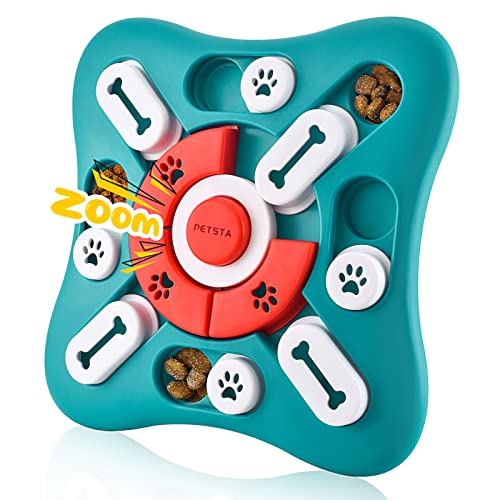
PETSTA’s puzzle offers three distinct playing modes and a 16-hole treat dispenser, designed to slow feeding and promote cognitive engagement. The center squeak button draws dogs’ attention, making the game rewarding and entertaining. The integrated maze and sliding elements require dogs to think through sequences to unlock rewards. The toys are suitable for dogs and cats, with varying difficulty to accommodate growing skills and to sustain interest over time. Supervision is advised to ensure safe play and prevent overly aggressive manipulation.
QGI Interactive Dog Toys: Motion-Activated Play

The QGI toy combines irregular rolling with a rope attachment to boost interactive play. It is made from chew-resistant materials suitable for most dogs, though not designed for aggressive chewers. With two speed modes—fast and slow—it accommodates energetic dogs as well as smaller or more cautious pups. The motion-activated feature can sustain interest, encouraging dogs to chase, pounce, and explore as they work to trigger movements and rewards. A versatile option for daily enrichment and boredom relief.
Buying Guide: Key Purchase Considerations
- Dog size and chewing style: Choose puzzle toys rated for your dog’s size and chewing strength to ensure durability and safe play.
- Difficulty level and progression: Look for toys with multiple difficulty modes or adjustable features to grow with your dog.
- Food-dispenser mechanism: Consider how treats are dispensed, whether via sliding, pressing, or rolling, and how this affects engagement and pace.
- Cleaning and maintenance:Select toys easy to clean, especially for dogs that drool or make frequent messes during play.
- Supervision and safety: Always supervise new puzzles, especially with smaller parts or delicate components that could pose choking risks.
- Materials and durability: Favor non-toxic, chew-safe materials and sturdy construction to withstand regular play and rough handling.
- Noise and acceptance: Some toys incorporate sounds or movement that dogs may initially resist; gradual introduction can improve adoption.
- Intended behavior improvements: Identify whether your goal is mental stimulation, slow feeding, anxiety relief, or overall enrichment to select the best option.
How to Use Stimulation Toys Effectively
- Introduce gradually: Start with the easiest mode and short sessions to prevent frustration.
- Rotate toys: Keep interest high by rotating different puzzles every few days.
- Combine with training: Pair puzzle play with basic commands to reinforce positive behaviors during turns and actions.
- Supervise initial use: Monitor for safe interaction and intervene if the dog becomes overly frustrated or destructively aggressive.
- Use during high-energy times: Schedule puzzle play when your dog has ample energy to burn, such as after a walk or training session.