Maintaining the correct pH is crucial for the health of coral, fish, and invertebrates in saltwater systems. The products below are selected for their relevance to stabilizing, adjusting, and monitoring pH in marine tanks. This guide compares pH boosters, pH decrease agents, and measurement tools to help aquarists choose the right approach for reef, fish-only, and mixed systems.
| Product | Brand | Type | Key Benefit |
|---|---|---|---|
| Brightwell Aquatics pH+ Alkalinity Booster | Brightwell Aquatics | pH and KH booster | Raises pH and strengthens buffering for corals |
| KORDON pH Decrease Adjuster | Kordon | pH decrease agent | Gradually lowers pH for acidic conditions |
| KORDON pH Increase Adjuster | Kordon | pH increase agent | Rapidly raises pH for alkalinity adjustment |
| Brightwell Florin pH- | Brightwell Aquatics | pH and alkalinity reducer | Lower pH safely in freshwater/marine setups |
| API High Range pH Test Kit | API | pH test kit | Monitors pH range 7.4–8.8 for marine systems |
Note: The following selections are showcased with emphasis on saltwater compatibility and reef-keeping considerations. Each product card includes a direct link to its Amazon listing and an image for quick recognition.
Brightwell Aquatics pH+ Alkalinity Booster
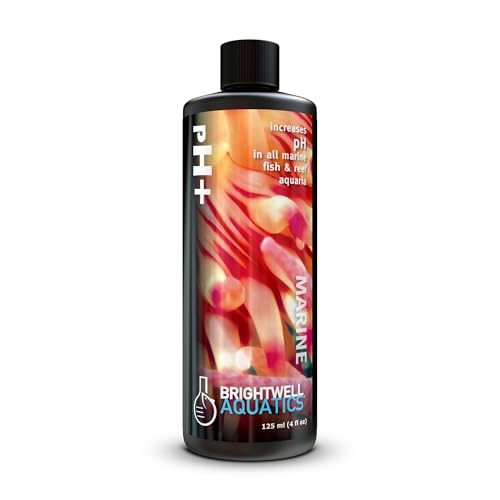
Brightwell Aquatics pH+ is designed to raise pH and alkalinity (KH) in marine systems, supporting coral growth and stability. The product helps maintain consistent pH by strengthening the carbonate buffering capacity of the water, which is vital in reef tanks with calcium carbonate skeletons. It is suitable for saltwater and mixed systems where maintaining stable pH reduces the risk of coral stress and coloration shifts. Use as part of a regular dosing routine guided by test results to avoid abrupt changes. Always read the label for dosing instructions and compatibility with other buffers and calcium reactors.
KORDON pH Decrease Adjuster

Kordon’s pH Decrease Adjuster offers a gradual method to lower pH levels, suitable for freshwater and saltwater tanks alike. This approach is useful when simulating low-pH biotope conditions or preparing tanks for species that prefer more acidic environments. It pairs well with routine water changes and buffering strategies that aim to maintain stable pH without sharp swings. Always coordinate with a reliable test kit to confirm that pH changes align with target ranges for your specific livestock and corals.
KORDON pH Increase Adjuster

The Kordon pH Increase Adjuster is a fast-acting option to raise pH in both fresh and saltwater tanks. It is designed to work quickly and can be used when introducing new saltwater mixes or after events that temporarily lower pH, such as high biological activity or carbonate buffering shifts. Pair with consistent monitoring using a reliable test kit to prevent overcorrection. Compatibility with other buffers and stabilizers should be considered to maintain a balanced system.
Brightwell Florin pH-

Brightwell Florin pH- is a water conditioner designed to safely lower pH in freshwater, marine, and planted aquariums. It also reduces alkalinity gradually, helping mimic acidic environmental conditions and facilitating certain spawning triggers or biotope simulations. In saltwater setups, this product can be useful when a controlled pH reduction is part of coral-based or species-specific husbandry. Monitor results with a dependable pH meter or test kit to avoid overshooting target ranges.
API High Range pH Test Kit

The API High Range pH Test Kit is designed for both freshwater and saltwater aquariums, with a focus on the 7.4–8.8 pH range typical of marine systems. The kit includes testing solutions, a color card, and a test tube with cap to help monitor water quality and catch deviations that could harm fish, corals, and invertebrates. Regular testing supports proactive management of pH swings, helping maintain stable conditions during feeding, lighting, and denitrification processes. Use in conjunction with buffers and dosing plans appropriate for your tank’s stocking and coral load.
Buying Guide: Key Factors For pH Management In Saltwater Aquariums
- System type and goals: Reef tanks require stable pH with strong buffering, while fish-only tanks may tolerate broader ranges if livestock are resilient. Match products to your tank’s needs.
- Stability vs. speed: pH adjustments should balance speed of correction with long-term stability. GradualAdjusters reduce shock to inhabitants and help maintain coral and microbial health.
- Monitoring approach: Use reliable digital meters or colorimetric test kits to track pH. For marine tanks, monitor daily during dosing changes and after water changes or lighting cycle shifts.
- Alkalinity (KH) management: pH changes often accompany alkalinity shifts. Consider products that address KH alongside pH to prevent swings and maintain buffering capacity.
- Compatibility: Check compatibility with calcium reactors, reef buffers, and other additives. Some products interact with buffers and can cause precipitation or unintended shifts.
- Saltwater specificity: Select pH modifiers designed for marine environments. Some freshwater products can alter salinity or carbonate chemistry in unwanted ways.
- Dosing discipline: Follow manufacturer instructions and start with conservative dosages. Record dosing, test results, and livestock responses to refine your routine.
- Emergency scenarios: Have a plan for sudden pH drops due to system shocks, overfeeding, or equipment failure. Quick but controlled actions protect sensitive corals and fish.
- Longevity and cost: Consider the long-term needs of your tank. Some products may be more cost-effective when used sparingly with accurate testing.
In sum, managing pH in a saltwater aquarium is a balance between monitoring, buffering, and careful adjustment. The selected products offer a range of options—from direct pH boosters and reducers to monitoring supplies—to help maintain a stable, healthy marine environment.