Leopard geckos require a reliable heat source and proper lighting to maintain their health and natural behaviors. This guide highlights five top heat-lighting options that balance warmth, UV exposure, and energy efficiency. Each product provides essential features to help keep geckos active, feeding well, and comfortable in their habitat. Consider your tank size, start-up temperature needs, and day-night cycling when choosing a setup.
| Product | Brand | Key Benefit |
|---|---|---|
| Dual Reptile Light Fixture with Switches | REPTITRIP | Independent heat and UVB control for precise habitat temps |
| KinDeep Infrared Heat Lamp Bulbs: 75W (2 Pack) | KINDEEP | Rapid, consistent warmth with minimal disturbance |
| MCLANZOO Reptile Heat Lamp 75W (2 Pack) | MCLANZOO | Simulates natural daylight and warm basking areas |
| LUCKY HERP 150W Ceramic Heat Emitter (2-Pack) | LUCKY HERP | No light emission; ideal for nighttime warmth |
| DOMICA Turtle Heat Lamp + 2 Bulbs (50W, 35W) | DOMICA | Safety features and adjustable heat distribution |
REPTITRIP Dual Reptile Light Fixture

The REPTITRIP fixture offers two independent switches for heat and UVB, enabling precise control over basking zones and lighting. Its reflective interior maximizes light distribution, reducing energy waste while promoting healthy reptile activity and growth. Each socket supports up to 160W, accommodating various lamp types such as ceramic heat bulbs and UVB lamps. This setup is suitable for leopard geckos that require warm basking spots with supplemental UV exposure for overall health.
KINDEEP Infrared Heat Lamp Bulbs: 75W (2 Pack)

This two-pack provides consistent infrared warmth with a gentle red glow that does not overly disturb gecko behavior. The bulbs concentrate heat where needed for rapid temperature rise, supporting efficient basking zones. Suitable for a range of reptile species, the KinDeep bulbs are a practical option for maintaining daytime warmth in Leopard gecko habitats while allowing cooler cooling zones for activity and exploration.
MCLANZOO Reptile Heat Lamp 75W (2 Pack)

These daylight heating bulbs simulate natural sun exposure, promoting appetite and digestion while delivering effective warmth. Quick heating helps establish a stable basking zone, essential for leopard geckos that rely on defined temperature gradients. The bulbs are compatible with various terrarium setups and support a broad range of reptiles, making them a versatile addition to a gecko habitat.
LUCKY HERP 150W Ceramic Heat Emitter
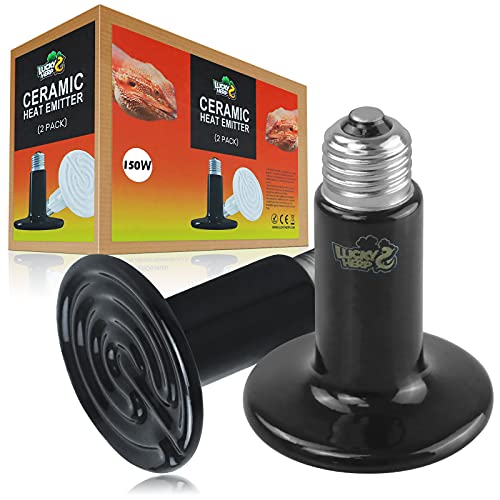
This ceramic heat emitter emits no light, ensuring a quiet night-time warming option. It heats quickly, reaching the target temperature within minutes, and operates without disrupting sleep cycles. Constructed from durable ceramic with a standard E26 base, it’s a reliable choice for maintaining nighttime warmth in leopard gecko enclosures with predictable durability and energy efficiency.
DOMICA Turtle Heat Lamp + 2 Bulbs

DOMICA’s kit includes a heat lamp with two bulbs (50W and 35W) and a 360° rotatable clip for flexible heat placement. The unit uses heat-resistant aluminum alloy and reinforced ceramic bases for safety and longevity. It’s designed to mimic sun warmth for reptiles, including leopard geckos, and offers adjustable heat distribution to create optimal basking zones while maintaining safe operation.
Buying Guide: Key Purchase Considerations
- Heat requirements: Leopard geckos prefer warm basking zones around 88–92°F with cooler ambient areas. Choose products that allow a defined warm spot and gradient rather than uniform heat.
- Light vs. heat: Some geckos benefit from UVB exposure, but nighttime warmth is often most critical. Consider fixtures with independent switches for heat and UVB to tailor day/night cycles.
- Energy efficiency and durability: Ceramic heat emitters and infrared bulbs offer long lifespans with minimal light, while UVB/heat combos provide day lighting benefits. Look for sturdy housings and safe mounting options.
- Compatibility: Ensure bulbs fit standard sockets (e.g., E26) and are appropriate for your terrarium size. Larger enclosures may require multiple heat sources to maintain a stable gradient.
- Safety: Secure mounting, avoid proximity to damp surfaces, and follow manufacturer guidelines for distance from enclosure walls to reduce fire risk and burns.
- Cost of ownership: Consider initial setup plus replacement bulbs. Some models offer two bulbs or two switches, potentially reducing the number of devices needed.
- Nighttime considerations: If nighttime warmth is needed without light, prioritize ceramic emitters or infrared options to avoid disrupting sleep and activity cycles.