Selecting a heat bulb for a ball python requires balancing warmth, darkness, and reliability. Ceramic emitters and infrared basking bulbs provide steady heat without light disruption, helping maintain the temperature gradient essential for healthy thermoregulation. Below is a focused guide to five top-rated heat bulbs, with quick-access buying details and practical considerations for ball python enclosures.
| Product | Brand | Type | Wattage | Notes |
|---|---|---|---|---|
| LUCKY HERP 150W Ceramic Heat Emitter | LUCKY HERP | Ceramic Heat Emitter | 150W | No light emission; fast heat-up; durable ceramic |
| REPTI ZOO 100W Reptile Heat Lamp (2 Pack) | REPTI ZOO | Ceramic Heat Emitter | 100W | Non-light emitting; long life; infrared heat |
| Fluker’s Basking Spotlight Bulbs for Reptiles (60W) | Fluker’s | Incandescent Spotlight | 60W | Directs heat and light; infrared; basking focus |
| DOMICA 150W 2 Pack Reptile Heat Bulb | DOMICA | Ceramic Heat Emitter | 150W | No light; rapid heat; durable ceramic |
| REPTI ZOO 75W Reptile Heat Lamp Bulb (2 Pack) | REPTI ZOO | Heat Lamp Bulb | 75W | Infrared; red light; long service life |
LUCKY HERP 150W Ceramic Heat Emitter
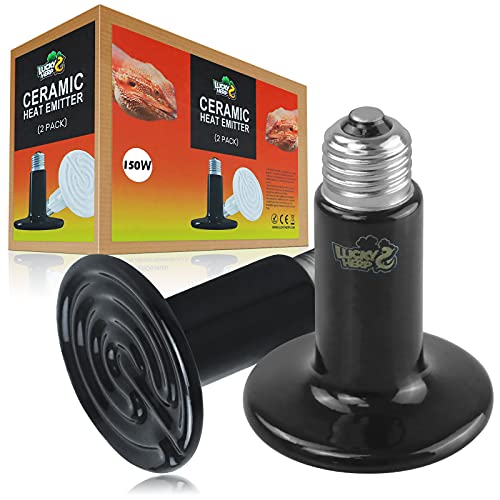
The LUCKY HERP 150W Ceramic Heat Emitter is designed to provide steady warmth without emitting visible light. This helps protect a ball python’s nocturnal cycle while delivering rapid heat-up—typically noticeable within seconds and reaching the target temperature in minutes. Built from thick ceramic, the emitter is durable and suitable for E26 sockets at 120 volts, with an estimated lifespan around 10,000 hours. These features make it a reliable option for maintaining a stable basking zone and overall thermal gradient.
- No light emission during operation, preserving sleep cycles
- Fast heat-up: noticeable warmth within 10 seconds
- Long-lasting ceramic construction with durable shell
REPTI ZOO 100W Reptile Heat Lamp (2 Pack)

This 100W ceramic heat emitter from REPTI ZOO provides 24-hour warmth, essential for reptile thermoregulation. Its infrared heat penetrates tissues without disturbing natural behaviors, and the unit offers a long service life with an approximate rating of 10,000 hours. The design ensures a consistent heat distribution ideal for creating a comfortable basking site within a ball python enclosure, supporting stable core temperatures during day or night cycles.
- Reliable, continuous warmth for reptiles and amphibians
- Non-light emitting infrared heat
- Up to about 10,000 hours of operation
Fluker’s Basking Spotlight Bulbs for Reptiles (60W)

Fluker’s 60W basking bulbs focus heat and light onto a specific area, helping regulate core body temperature. These incandescent spotlight bulbs emit infrared light, supporting infrared heat delivery that reptiles rely on for basking. The design is practical for directing warmth to preferred spots in the enclosure, aligning with ball pythons’ natural behaviors while maintaining a safe, controlled environment.
- Directs heat to a focused basking area
- Supports infrared warmth for reptiles
- Useful as a snake light source when needed
DOMICA 150W 2 Pack Reptile Heat Bulb

The DOMICA 150W ceramic heat emitters deliver steady heat without light, designed to align with reptiles’ sleep cycles and natural photoperiods. This unit heats rapidly and distributes heat evenly, providing a dependable thermal gradient for ball pythons. Its high-density ceramic construction withstands high temperatures and is built to last, making it a practical option for both day and night heating while avoiding light interference.
- No light emission; suitable for nocturnal heating
- Rapid heat-up with consistent output
- High-temperature ceramic construction for durability
REPTI ZOO 75W Reptile Heat Lamp Bulb (2 Pack)

This 75W heat lamp from REPTI ZOO provides a balanced approach to heating with infrared output and a red-tinted light that minimizes disruption to reptiles’ day/night cycles. The product is designed for long life and efficient heating, offering a practical option for maintaining a stable ambient temperature in the basking zone. The simpler design makes it easy to install and pair with other heat sources as part of a layered heating strategy.
- Infrared warmth with minimal disruption
- Long service life and efficient heating
- Red-tinted light suitable for daily use
Buying Guide: Key Considerations For Ball Python Heating
When selecting a heat bulb, ball python keepers should evaluate heat type, light emission, enclosure size, and power reliability. Ceramic emitters provide steady, light-free warmth ideal for nocturnal activity, whereas incandescent basking bulbs deliver visible light along with heat, which can be useful for daytime basking but may affect sleep patterns. Consider the enclosure’s temperature gradient, the distance to the animal, and whether you need a single source or a combination of heat sources to avoid hot spots.
- Heat Type: Choose ceramic emitters for night heating and no light; use incandescent bulbs if you need visible basking cues, but note potential light disruption.
- Warmth Consistency: Look for long-rated lifespans (thousands of hours) and even heat distribution to prevent thermal stress.
- Heat Up Time: Quick heat-up is beneficial in changing room conditions; verify the manufacturer’s stated time to reach target temperature.
- Durability: Ceramic materials typically outperform plastic-based bulbs in high-temperature environments.
- Compatibility: Confirm socket type (usually E26) and voltage (commonly 120V in the U.S.) for safe operation.
- Night-Mode Compatibility: If nocturnal activity is critical, prioritize non-light emitting emitters.
- Heat vs. Light Balance: Balance the need for light during the day with the necessity to maintain quiet, dark nights for the animal.
- Energy Efficiency: Long-life emitters reduce frequent replacements and maintenance in a humid terrarium setting.
In practice, many keepers use a combination: a high-wattage ceramic emitter for consistent night heating, paired with a lower-wattage day bulb that provides visible basking cues without compromising nocturnal rhythms. Regular monitoring with a reliable thermometer and hygrometer helps ensure the temperature gradient remains within the ball python’s preferred range, reducing stress and supporting healthy shedding and feeding.