Choosing the right food for a pug involves balancing portion size, digestibility, coat and skin health, and nutrition tailored to a flat-faced breed. The following selections focus on reputable brands with formulas designed for Pugs or small breeds, emphasizing bite-sized kibble, skin support, and weight management. The list below highlights five solid options, plus a practical buying guide to help compare features and ingredients.
| Product | Brand | Key Benefits |
|---|---|---|
| Royal Canin Breed Health Nutrition Pug Adult Dry Dog Food, 10 lb Bag | ROYAL CANIN | CRUNCHY KIBBLE for pug muzzle; skin support with EPA/DHA |
| Royal Canin Breed Health Nutrition Pug Puppy Dry Dog Food, 2.5 lb Bag | ROYAL CANIN | Small kibble design; antioxidant blend for immune development |
| Hill’s Science Diet Light, Adult 1-6, Weight Management Support, Small Kibble, Dry Dog Food, Chicken & Barley, 5 lb Bag | Hill’s Science Diet | Low calorie with L-Carnitine; satisfying fiber; coat health |
| Optimeal Small Breed Dry Dog Food – Small Kibble for Small Dogs, High Protein, Lamb & Rice, 3.3 lbs | Optimeal | Fresh lamb first ingredient; supports digestion and energy |
| Blue Buffalo Life Protection Formula Puppy Dry Dog Food with DHA and ARA, Made with Natural Ingredients, Chicken & Brown Rice Recipe, 5-lb Bag | Blue Buffalo | Real chicken first; DHA/ARA for cognitive and eye health |
Note: This summary highlights core benefits relevant to Pug care, including breed-tailored nutrition, digestibility, and coat support. Each product section below offers more detail on ingredients and how these formulas can fit a pug’s dietary needs.
Royal Canin Pug Adult Dry Food
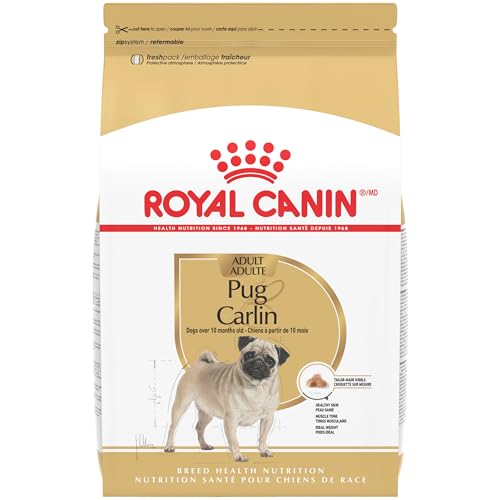
Royal Canin’s Pug Adult formula is crafted specifically for purebred Pugs aged 10 months and older. The crunchy cloverleaf kibble is designed to accommodate a pug’s short muzzle, making it easier to pick up and chew (a key consideration for brachycephalic breeds). This dry food also emphasizes skin and coat health with EPA and DHA from fish oil, supporting a healthy barrier and glossy fur. The product’s breed health focus centers on a precise nutrient profile that aligns with Pug metabolism and body conditions, helping to maintain an ideal weight while promoting overall well-being.
Royal Canin Pug Puppy Dry Food

This Pug Puppy formula is tailored for purebred Pugs from 8 weeks to 10 months, featuring a small kibble size to suit tiny mouths. The antioxidant blend supports immune system development during puppyhood, while the kibble design facilitates easy chewing and digestion. Although formulated for growing puppies, it remains mindful of the breed’s tendency toward weight gain and skin sensitivity, offering a balanced nutrient profile that supports healthy development during the critical early months.
Hill’s Science Diet Light Small Breed

Hill’s Science Diet Light is designed for small-breed dogs needing weight management. The formula includes low calories and L-Carnitine to help promote an ideal body weight, junto with high-quality protein and natural fibers to help satisfy hunger between meals. Omega-6s and vitamin E support coat and skin health, making this option suitable for pugs prone to sheen and dermatitis. This option emphasizes portion control and satiety, which can be beneficial for Pugs that tend toward weight gain.
Optimeal Small Breed Lamb & Rice

Optimeal Small Breed Dry Dog Food uses lamb as the first ingredient, providing highly digestible protein for small dogs. The small kibble helps with easy pickup and chewing, and the formula supports healthy energy levels for active pugs. It also emphasizes a balanced blend of nutrients that support digestion and coat health. This option is notable for its emphasis on grain-inclusive nutrition, which can be gentler on some dogs with sensitive stomachs, and its focus on small-breed vitality.
Blue Buffalo Life Protection Puppy Formula

Blue Buffalo Life Protection Formula Puppy Food combines real chicken as the first ingredient with DHA and ARA to support cognitive development and retinal health. The LifeSource Bits provide antioxidants for immune support, and the recipe centers on natural ingredients without poultry by-products. This option emphasizes a balanced start for puppies, with a nutrient-rich profile that may suit households seeking a natural, wholesome approach to early-life nutrition in pugs.
Buying Guide: Key Considerations For Pug Food
- Size and texture: Pugs commonly benefit from small or toy-breed kibbles that are easier to pick up and chew. Look for a kibble size matched to the breed’s muzzle and bite.
- Calorie control: Pugs are prone to weight gain. Consider formulas with lower calories or added L-Carnitine to support healthy weight management, especially for adults.
- Digestibility: Choose recipes with high-quality protein sources and fiber to promote satiety and gentle digestion, particularly if your pug has a sensitive stomach.
- Skin and coat health: Formulas with EPA/DHA and essential fatty acids support skin barrier function and fur quality, common concerns for pugs with dermatitis or seasonal shedding.
- Life stage and growth: Puppies have different nutritional needs than adults. Use puppy formulations for dogs under 12 months unless the breed-specific adult formula is recommended by a veterinarian.
- Allergies and sensitivities: If a pug shows signs of food sensitivities, consider grain-free options or limited-ingredient recipes, and consult a vet for an elimination trial.
- Brand reliability and veterinary guidance: Reputable brands with breed-focused formulas may provide more precise nutrition for pugs. Always verify the product with a veterinarian if your pug has health conditions.
When selecting a diet for a pug, it is important to monitor weight, energy levels, and coat condition over time. A transition between foods should be gradual, typically 7–10 days, to minimize digestive upset. For any persistent skin issues, tail wags and appetite changes, or concerns about digestion, consult a veterinarian for tailored guidance.