Discover top-rated dog treat puzzle toys that engage canine intelligence, reduce boredom, and promote healthy eating habits. This guide highlights five popular options, detailing play styles, difficulty levels, and how they support cognitive development and behavior management. Each pick blends enrichment with practical benefits, making them suitable for puppies, adult dogs, and multi-pet households. Use the summary table below to compare at a glance and then explore detailed product sections to find the best fit for your furry friend.
| Product | Brand | Key Benefit |
|---|---|---|
| PETSTA Dog Puzzle Toys | PETSTA | Three play modes with slow feeder design and a scented path to rewards |
| Outward Hound Nina Ottosson Dog Brick | Outward Hound | Level 2 intermediate puzzle for gradual mental challenge |
| Barkwhiz Dog Puzzle Toy 3 Levels | Barkwhiz | Four levels and diverse games to extend engagement |
| Outward Hound Nina Ottosson Tower of Treats | Outward Hound | Level 4 expert complexity for advanced problem-solving |
| DR CATCH Dog Puzzle | DR CATCH | Interactive sliders and slow-feeding bowl for digestion support |
PETSTA Dog Puzzle Toys
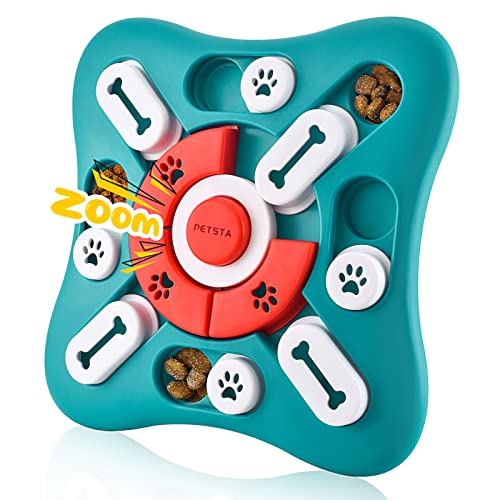
The PETSTA puzzle toy blends a 10 by 10 by 1.3 inch design with multiple engagement modes to encourage slow, mindful feeding. A central squeak button draws attention, while the 16-hole treat dispenser stretches mealtime beyond 20 minutes. The unit supports three distinct difficulty levels, enabling gradual progression as a dog’s problem-solving skills improve. Dogs and cats alike respond to the Spin & Slide and Seek & Hide concepts, which leverage scent and paw dexterity to uncover hidden rewards. This setup supports cognitive exercise and tail-wagging enrichment in one compact toy.
Key features include a versatile layout that rewards curiosity without overwhelming smaller pets, a durable construction designed for interactive play, and a design that can help reduce impulsive eating. The slow-feed mechanism fosters healthier digestion by extending the meal duration and providing steady mental stimulation. Owners may observe a shift from repetitive nibbling to strategic exploration as dogs learn to manipulate sliders and discover hidden treats.
Designed for homes with mixed pets or multi-dog households, the PETSTA puzzle offers a family-friendly entry point into enrichment play. It is suitable for pets who are new to puzzle toys and can scale with experience as the animal’s cognitive abilities grow. With consistent use, you may notice improved focus during mealtime and a calmer demeanor between meals.
Outward Hound Nina Ottosson Dog Brick

Outward Hound’s Dog Brick introduces level 2 intermediate play, ideal for pets with minimal puzzle experience seeking a new challenge. The design blends sliding compartments and rotational elements to create a flexible puzzle that rewards careful exploration. Aimed at providing mental stimulation, the game helps burn energy and can substitute some physical activity with cognitive effort. For many dogs, 15 minutes of problem-solving translates to a broader sense of well-being, sometimes equating to longer periods of calmer behavior after play.
Benefits include anxiety reduction through structured play, a reduction in destructive behaviors, and a measurable boost in engagement. The Dog Brick remains approachable for younger or less experienced dogs while still offering meaningful challenges for smarter canines who have mastered simpler puzzles. This makes it a strong mid-range option for households introducing enrichment toys into daily routines.
To maximize results, pair play with routine feeding times and supervise initial sessions. Rotate puzzles to maintain novelty and gradually increase difficulty as your dog demonstrates mastery. Careful observation will reveal preferred strategies, such as focusing on a specific compartment or iterating a sliding sequence to reveal the reward.
Barkwhiz Dog Puzzle Toy 3 Levels

The Barkwhiz puzzle offers four distinct play modes across levels 1–3, combining flip and linear track sliding elements to create varied pathways to the treat. This multi-stage approach helps extend engagement while challenging a dog’s problem-solving process. The 14-hole slow feeder is designed to lengthen feeding time further, promoting mindful eating and reducing gulping that can lead to digestion issues. Materials are chosen for safety and durability, supporting repeated sessions without excessive wear.
As a result, Barkwhiz supports cognitive development, enhances scent detection abilities, and reinforces learning through repetition. The progressive difficulty helps prevent boredom from creeping in and provides a reliable outlet for mental energy. Cleaning is straightforward, and the design accommodates regular use in households with multiple pets, reducing competition during mealtimes by employing controlled access to rewards.
Owners should supervise initial uses to ensure proper interaction with the mechanism. Rotate between other puzzles to keep the dog engaged and prevent over-reliance on a single game. With consistent play, dogs may show improved focus, refined problem-solving strategies, and longer attention spans during at-home enrichment sessions.
Outward Hound Nina Ottosson Dog Hide N’ Slide

Level 2 intermediate design with a focus on hide-and-seek mechanics, this Nina Ottosson dog puzzle emphasizes discovery through strategic movement. The game provides mental stimulation that translates into practical benefits such as reduced boredom and better compliance with routines. The 15-minute mental workout is framed as equivalent to roughly 30 minutes of physical activity, offering a balanced approach to exercise for dogs of diverse ages and sizes.
Redirection of anxious energy is a core outcome expected from consistent use. The interactive challenge supports phasic learning where dogs practice patience and problem-solving while awaiting rewards. It also helps dogs channel instinctual digging or rummaging into a constructive activity, mitigating common behavioral issues during periods of high energy or confinement.
To maximize advantages, start with unlocked all sections to simplify early sessions, then gradually close sections to increase difficulty. Rotate this puzzle with other enrichment toys to maintain novelty and prevent plateau. Observing how your dog approaches the task can inform future training cues and reward timing strategies.
DR CATCH Dog Puzzle

DR CATCH presents a blue-labeled dog puzzle featuring a large top surface and interactive sliders that guide dogs to hidden treats. The size is L9.44″ by W9.44″ by H1.14″, making it suitable for cats, puppies, and small dogs, while still offering mental challenges for more capable canines. The design emphasizes the act of sliding components to locate the reward, thereby improving both dexterity and problem-solving skills. In addition, the slow-feed aspect supports digestion by moderating eating pace.
This interactive toy acts as a pressure-relief tool, providing a structured outlet for dogs prone to anxiety or boredom. The combination of puzzle-solving and treat rewards can encourage positive behavior when left alone or during transitional periods. As with other puzzle toys, supervision during initial use is recommended to ensure safe interaction and to help guide effective play strategies.
Buying Guide: Key Purchase Considerations And Comparisons
When selecting a dog treat puzzle, consider the dog’s age, breed size, temperament, and experience with enrichment toys. Beginner puzzles should present light resistance and clear reward paths, while intermediate and expert options should incorporate multiple layers, varied mechanisms, and longer engagement times. Ease of cleaning, material safety, and durability are essential for long-term use, particularly for aggressive chewers or multi-pet households.
Important features to evaluate include: number of play modes and adjustable difficulties; the ability to customize food distribution to control pacing; and the presence of a dedicated slow-feed mechanism that supports digestion. Look for puzzles with modular or expandable designs to accommodate your dog’s growing abilities. Consider whether the toy encourages scent work, problem-solving strategies, or both, based on your dog’s preferences.
For dogs new to puzzles, start with simple tasks and gradually increase challenge level as confidence builds. Use positive reinforcement to reinforce successful attempts and avoid punishment for unsuccessful trials. Rotating different puzzles helps maintain interest and prevents frustration. Finally, ensure the product dimensions fit your dog’s size and living space to promote safe and enjoyable play sessions.
In sum, a well-chosen treat puzzle enhances cognitive development, reduces boredom-induced behaviors, and complements regular exercise. By matching a toy’s difficulty with your dog’s current skill, you can extend meal times, improve focus, and foster healthier eating habits across various breeds and life stages.