Finding the right bioactive substrate for ball pythons involves balancing humidity, drainage, and a stable ecosystem. The following selections focus on clay-based or plant-derived substrates that support bioactive terrariums while promoting natural behaviors, burrowing, and shedding. Each option contributes to improved drainage and aeration, with some also offering potential for plant growth in bioactive setups. This guide highlights five products designed to help keep ball pythons healthy in engaging habitats.
| Product | Brand | Core Benefit | Approx. Size / Volume |
|---|---|---|---|
| Halatool Reptile Substrate 2QT Clay Pebbles | Halatool | Fine drainage and air pathways | 2 quarts |
| The Bio Dude Terra Firma Reptile Substrate 36 quarts | BIODUDE | Bioactive habitat base with balanced ecosystem | 36 quarts |
| Riare 10LBS Expanded Clay Balls | Riare | Excellent drainage, lightweight, long-term stability | 10 lbs |
| Tender Tropicals Leaf Litter for Snakes | Tender Tropicals | Natural hiding, humidity balance, supports microfauna | 30 leaves |
| Halatool Reptile Substrate 8QT Leca Clay Pebbles | Halatool | Robust drainage layer for bioactive setups | 8 quarts |
Halatool Reptile Substrate 2QT Clay Pebbles Terrarium Bedding for Reptiles
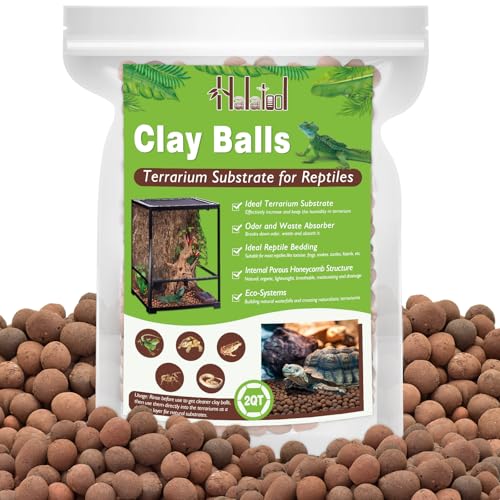
Halatool’s 2-quart expanded clay balls provide a natural, inert bedding option that doubles as a drainage medium. The product uses 100% natural clay fired at high temperatures, ensuring stability and no harmful residues. Each pebble is designed to channel excess water through internal micro-pores, aiding air circulation beneath the substrate layer. This helps ball pythons avoid overly damp conditions while still allowing for moisture exchange essential for shedding and hydration. The compact 4-16 mm size makes it suitable for layering with other substrates in small to mid-sized enclosures.
In practice, this substrate can act as a bioactive-friendly base when used as a drainage layer or combined with a secondary top substrate. It supports plant roots in vivarium setups and can be integrated into live plant arrangements that contribute to a more naturalistic habitat. While primarily a drainage medium, its inert nature minimizes the risk of substrate breakdown or nutrient spillover that could affect delicate ball python health. This makes it a versatile choice for researchers or hobbyists seeking a stable, long-lasting medium.
The Bio Dude Terra Firma Reptile Substrate 36 quarts
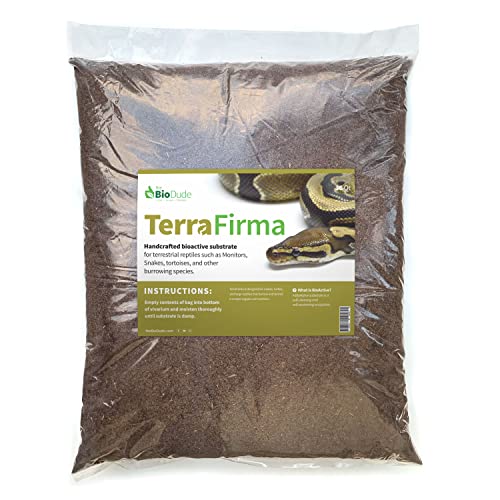
The Terra Firma substrate from The Bio Dude is designed for bioactive terrarium bases, hosting ball pythons, kingsnakes, milksnakes, and other reptiles. The mix emphasizes proper aeration and drainage to prevent clogging and stagnation. It also holds tunnels and burrows, aiding in shedding, respiration, and hydration. The formulation is balanced to support a self-sustaining microfauna community over time, with multiple ingredients chosen to sustain beneficial organisms that contribute to a resilient bioactive enclosure. The 36-quart volume is suitable for larger setups or multiple terrariums.
In selecting Terra Firma, keep in mind the need for a careful tiering with a topsoil or leaf litter layer if you plan to host isopods or springtails. The substrate’s bio-balanced design aims to minimize maintenance while maximizing natural behavior. For ball pythons, this substrate supports a humid microclimate without becoming a mold-prone, stagnant base. Slight adjustments in humidity and temperature will help match specific needs across different snake populations.
Riare 10LBS Expanded Clay Balls Terrarium Substrate

Riare offers a 10-pound bag of expanded clay balls, each 4-16 mm in diameter. This substrate is a lightweight, inert option ideal as a drainage layer and base for bioactive terrariums. Its high porosity supports airflow and rapid moisture movement, helping to prevent stagnation and anaerobic pockets. The packaging is resealable for long-term storage, and the clay pebbles can even be repurposed for garden use after the terrarium’s life cycle ends. In ball python setups, this substrate can support a robust drainage system while allowing room for plant-based bioactive ecosystems to establish.
The material is dust-free and pH-neutral, reducing potential irritation to sensitive reptiles. It serves well as a standalone base or paired with a top layer such as leaf litter or compost-rich mix. For hobbyists seeking a durable, low-maintenance option, Riare’s clay balls provide consistent performance across temperature and humidity variations typical in indoor terrariums.
Tender Tropicals Leaf Litter for Snakes

The Tender Tropicals leaf litter contains Indian Almond leaves (Catappa leaves), designed to create natural hiding spots and a bioactive bedding. When the leaves break down, they form a soft substrate that supports microfauna—such as isopods and springtails—while helping maintain humidity and temperature balance. This approach supports ball pythons by enhancing environmental stability and promoting natural behaviors like burrowing and nest-building. The litter also contributes to a self-sustaining habitat by providing a food source for decomposers that support a balanced ecosystem.
Leaf litter excels in dry or mixed climates where humidity control is important. It’s particularly useful for bioactive vivariums, where the combination of hiding spots and micro-fauna fosters a more realistic environment. Care should be taken to monitor humidity levels to prevent excessive moisture retention that could lead to substrate compaction, especially in tighter enclosures.
Halatool Reptile Substrate 8QT Leca Clay Pebbles
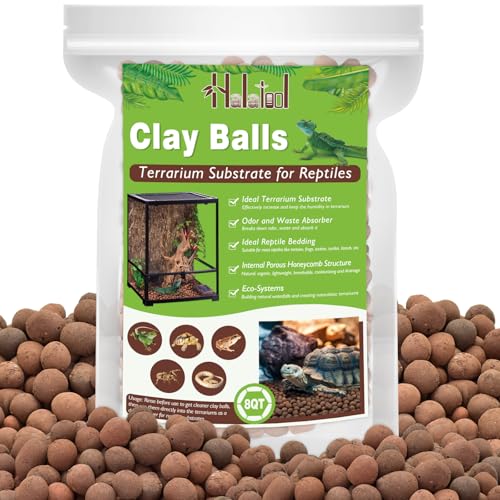
This Halatool option provides eight quarts of expanded clay balls designed as a premium bedding and drainage medium. The product emphasizes stability and inert composition, with no harmful substances released over time. Its internal micro-pores efficiently channel excess water while maintaining air pathways, an essential feature for bioactive setups that require steady moisture movement without waterlogging. The larger volume makes it well-suited for medium to large enclosures or for multiple tanks in a collection.
In practice, use Halatool’s 8QT clay pebbles as a core drainage layer, then add a compatible top substrate that supports burrowing and microfauna. Pairing with leaf litter or a plant-friendly soil mix can enhance the enclosure’s self-sustaining capabilities. For ball pythons, this medium helps prevent substrate compaction and promotes a healthier environment by providing consistent drainage and air exchange, even during higher humidity periods.
Buying Guide: Key Purchase Considerations And Comparisons
When choosing a bioactive substrate for ball pythons, consider drainage capacity, inertness, and the substrate’s role in fostering beneficial microfauna. Clay-based products excel at drainage and stability, while leaf litter encourages natural behaviors and humidity balance. Mixed systems that combine a clay or expanded clay base with a bioactive top layer (such as leaf litter or soil-based mixes) often provide the best overall performance.
Important factors to evaluate include: particle size, porosity, pH neutrality, dust reduction, and compatibility with live plants if you plan a planted bioactive habitat. For larger enclosures or multi-tank collections, volume becomes critical; opt for bigger bags or multi-pack options to reduce maintenance frequency. Durability and ease of replacement are also practical considerations, as some substrates last longer before needing a top-up or replacement due to cleaning cycles.
Performance perspectives vary: clay-based substrates like LECA and expanded clay offer superior drainage and longevity, with minimal decomposition risk. Leaf litter introduces natural biological processes that help sustain a self-regulating ecosystem but may require more monitoring of humidity and waste. A layered approach—drainage base, then a top substrate that supports isopods and springtails—often delivers the most resilient and naturalistic ball python habitat.