Choosing the right reptile heat mat is essential for maintaining safe, stable temperatures in terrariums. This guide reviews five reliable options designed for hermit crabs, lizards, snakes, and more. Each mat offers adjustable heat control, durable construction, and easy mounting to support natural thermoregulation in enclosure setups. Below, you’ll find a quick product snapshot, followed by detailed sections for each mat and a buying guide to help you compare features, installation tips, and safety considerations.
| Product | Brand | Power | Size | Notes |
|---|---|---|---|---|
| Aiicioo | 16 W | 8″ x 12″ | Thermostat included | |
| Aiicioo | 16 W | 8″ x 12″ | Adhesive upgraded | |
| REPTI ZOO | 24 W | 8″ x 12″ | Adjustable thermostat | |
| BN-LINK | 16 W | 8″ x 12″ | Waterproof; easy setup | |
| iPower | Not stated here | 8″ x 12″ | Improved design; energy efficient |
Aiicioo Under Tank Heater Thermostat Reptile Pad

The Aiicioo Under Tank Heater Thermostat is a 16-watt heating pad designed for hermit crabs, lizards, and similar terrarium inhabitants. It measures 8” x 12” and operates at 120 volts, delivering steady heat in the 104℉ to 122℉ range. A digital thermostat provides a display for precise control, with a broader functional range from 32°F to 140°F. The package notes mounting options for bottom or side installation and includes rubber feet to elevate the terrarium and prevent heat pooling. This model emphasizes a solid adhesive upgrade to minimize deformation, detachment, or melting, making it a reliable choice for affixed applications. Caution is advised not to use heating pads on plastics, acrylic, or water tanks to avoid damage.
Features from the listing include 8” x 12” size, 120V operation, 16W power, temperature control within 104–122°F, a thermostat display, upgraded adhesive material, and mounting versatility. The product is positioned for those seeking robust heat transfer with safer, longer-lasting adhesion. The included mounting guidance helps ensure even heat distribution while reducing direct contact with sensitive enclosure materials. Always verify tank compatibility and species-specific thermal needs before use.
Aiicioo Reptile Heating Pad 16W for Reptiles

This 16-watt Aiicioo heating pad is designed for reptile habitats around 8” x 12” and similar enclosures. It provides steady heat within the 104℉–122℉ range and recommends a medium tank size of 30–40 gallons. The pad can be mounted on the bottom or side of a terrarium, with rubber feet included to elevate and allow heat to dissipate. As with most reptile heating pads, it cautions against use on plastics, acrylics, or water tanks. The package highlights an upgraded adhesive to reduce the risk of melting or detachment and notes the adhesive backing that remains effective after installation when correctly applied.
Key points include 120V operation, 16W power, and an emphasis on stable heat delivery to support reptile thermoregulation. This option is suitable for hobbyists seeking a dependable, mid-range heat source with straightforward installation steps and durable mounting support. For best results, ensure the tank’s material and surface are compatible with adhesive-backed pads and confirm appropriate temperature targets for your species.
REPTI ZOO 24W Reptile Heat Pad

The REPTI ZOO 24W heating pad is designed for a typical 8” x 12” enclosure and offers a wider wattage for faster heating. It features an adjustable thermostat and a waterproof PVC surface that provides insulation and durability for long-term use. The high-quality construction is aimed at minimizing cold spots and promoting a safe thermal gradient within the enclosure. This model targets users who need quicker heat-up times and reliable temperature control across various reptile species, including turtles, hermit crabs, bearded dragons, leopard geckos, and more.
Highlights include rapid heating performance from carbon fiber technology, a wide adjustable range (68°F–122°F or 20°C–50°C), waterproof surface, and a focus on stable heat transfer. Potential considerations include ensuring compatibility with tank lids and avoiding overheating by using the thermostat to maintain target temperatures. This mat is suitable for hobbyists requiring consistent warmth with straightforward setup and robust performance across diverse species.
BN-LINK Reptile Heat Pad 8″ X 12″ 16W
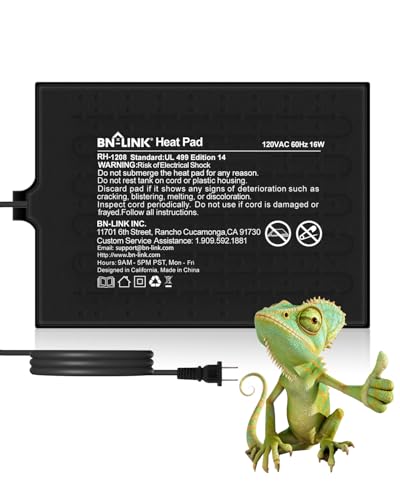
The BN-LINK 8″ x 12″ reptile heating pad delivers 16 watts of power in a compact footprint, making it a strong option for 30–40 gallon terrariums and similar enclosures. The product emphasizes energy efficiency, with adhesive-backed mounting that is waterproof and easy to clean. Its practical design targets users who want reliable warmth without a high electricity draw or complex installation. The pad is suitable for turtles, lizards, frogs, snakes, and hermit crabs when used with appropriate heat targets and species-specific requirements.
Key considerations include maintaining even heat distribution, verifying enclosure material compatibility, and using with a thermostat or controller to prevent overheating. The BN-LINK pad is known for a straightforward setup process comes with reliable adhesive, enabling quick attachment to glass or similar tank surfaces. For beginners or experienced keepers, this mat provides a balanced combination of performance, simplicity, and cost-effectiveness.
iPower 8×12 Inch Reptile Heat Pad

The iPower 8×12 inch reptile heat pad emphasizes an improved design with a new PTC heating material and insulation that improves heat transfer efficiency. It reaches the desired temperature quickly and aims to save energy. The pad uses a strong 3M adhesive for secure mounting on the terrarium surface, promoting effective heat transfer. It is positioned as a versatile option for reptiles, lizards, amphibians, small animals, or even plant terrariums. Its broad applicability makes it useful for hobbyists who maintain varied setups and want a reliable heat source with straightforward installation.
Considerations for use include confirming compatibility with the tank material, ensuring proper safety against direct contact with sensitive surfaces, and pairing with a thermostat to regulate temperatures within species-specific ranges. The pad’s design supports both primary and secondary heating needs and can be used for germination or cultivation tasks if needed, though reptile comfort remains the primary use.
Buying Guide: Key Purchase Considerations
- tank compatibility: ensure the mat adheres well to glass or suitable tank surfaces; avoid use on plastic or acrylic where recommended by the manufacturer
- heat range and control: choose a model with an adjustable thermostat or temperature display to maintain species-appropriate warmth
- wattage and enclosure size: match wattage to enclosure volume; smaller tanks typically need less heat but require precise control
- mounting method: consider bottom vs. side mounting, plus features like rubber feet or elevated mounting to promote heat dissipation
- durability and adhesion: upgraded adhesive helps prevent detachment or melting; check for waterproof surfaces for long-term use
- safety features: look for protection against overheating, safe operating voltages, and guidance on avoiding contact with tank materials that could be damaged
- maintenance and cleaning: waterproof surfaces ease cleaning; ensure cords and thermostats are accessible for safe maintenance
- species-specific needs: tropical vs. desert species require different heat targets; consult species guidelines and monitor with a thermometer
- energy efficiency: options with lower wattage and efficient heat transfer reduce electricity use while maintaining comfort
In selecting a reptile heat mat, consider enclosure size, species requirements, and whether you prefer built-in thermostatic control or a separate temperature controller. Compare heat-up times, adhesion quality, and the reliability of the thermostat to maintain stable temperatures. Assess installation convenience, including whether the mat suits bottom or side mounting and how easy it is to clean and maintain over time. Safety should be a priority: verify that the mat is placed away from the tank’s water sources and materials that could be damaged by heat, and always use a thermometer to verify actual enclosure temperatures.