Choosing the right milk replacer is essential when a mother’s milk isn’t available. The following products are widely used by breeders and caregivers to support newborn puppies during the critical early weeks. This guide highlights five reliable options, summarizing their key benefits and digestion features to help you pick a formula that suits a sensitive gut or special nutritional needs.
| Product | Brand | Type | Notes |
|---|---|---|---|
| PetLac Powder for Puppies | PetAg | Powder Milk Replacement | Complete nutrition; easy to digest; newborn to six weeks |
| Goat’s Milk Esbilac Liquid | PetAg | Ready-to-Feed Liquid | Whole goat milk protein; for sensitive digestions |
| Esbilac Puppy Milk Replacer Powder | PetAg | Powdered Formula | Prebiotics and probiotics; easy digestion |
| Hartz Powdered Puppy Milk Replacer | Hartz | Powdered Formula | Calcium and vitamins; quick mix |
| Esbilac Puppy Milk Replacer Liquid | PetAg | Liquid Formula | Ready-to-feed; durable storage |
PetLac Powder for Puppies – 10.5 oz

PetLac Powder provides complete nutrition for puppies from newborn to six weeks old. It is designed as a suitable food source for orphaned, rejected, nursing, or weaning puppies, delivering balanced vitamins, minerals, and amino acids. The powder is formulated to be easy to digest and palatable, with prebiotics and probiotics to support gut health. This option supports proper growth and development during the critical early weeks and is often used as a reliable all-purpose replacement when a dam’s milk isn’t available.
Goat’s Milk Esbilac Liquid – 11 oz

Goat’s Milk Esbilac Liquid offers a ready-to-feed option close to mother’s milk, using whole goat milk protein to support puppies with sensitive digestive systems. It provides essential nutrition for newborns to six weeks old and includes vitamins, minerals, and trace nutrients. The formula is designed for easier digestion, aided by a fiber blend that helps gut health and stool consistency, making it a preferred choice for puppies with sensitive stomachs or dairy sensitivities.
Esbilac Puppy Milk Replacer Powder – 12 oz

Esbilac is widely regarded as a leading puppy milk replacer, offering complete and balanced nutrition closest to maternal milk. The formula includes prebiotics and probiotics to support immunity and digestion, along with a blend of protein, fat, and carbohydrates aligned with puppies’ growth needs. It is designed to be highly palatable and easy to digest, aiding puppies from birth through six weeks as they transition toward weaning.
Hartz Powdered Puppy Milk Replacer – 12 oz
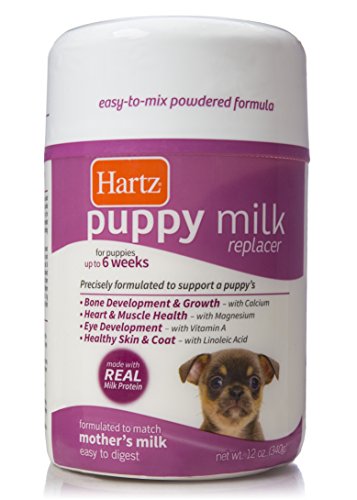
Hartz provides a quick-mix formula designed to resemble a mother dog’s milk. It blends easily with room-temperature water for on-demand feeding and pairs with a nursing bottle. The formula includes calcium to support bone strength, magnesium for heart and muscle function, vitamin A for eye development, and linoleic acid for healthy skin and coat. It’s a practical option for caregivers seeking a straightforward, reliable ratio and easy preparation.
Vets Preferred Puppy Milk Replacer Formula – 12 Oz

Vets Preferred Milk Replacer provides nutrition for both puppies and nursing mothers, supporting healthy growth in newborns while aiding recovery nutrition for pregnant and nursing dogs. The product is enriched with colostrum to strengthen immune function and digestive health. Its balanced protein, fat, and fiber composition helps support steady growth, energy, and development across breeds, making it a solid choice for multi-puppy litters or diverse care needs.
PetLac Liquid for Puppies – 32 oz

PetLac Liquid offers ready-to-feed milk replacement for puppies from newborn to six weeks old. It contains milk and vegetable protein, delivering nutrition in a convenient, no-mess format. The ready-to-feed formulation is designed for easy use, and the liquid form can be particularly suitable for caregivers who require quick preparation and reliable digestion for a variety of small breeds and litter sizes.
Buying Guide: Key Purchase Considerations
Choosing the best milk replacer depends on several factors, including a puppy’s health, age, and digestive tolerance. Consider the following perspectives:
- Age and stage: Most formulas are designed for newborns to six weeks old. Ensure the product explicitly targets this window, especially if you’re weaning or supporting an orphaned pup.
- Digestive health: Some formulas include prebiotics, probiotics, or fiber blends to support gut health and immune function. If a puppy has a history of digestive sensitivity, a formula with these additives may be preferable.
- Protein source: Goat milk-based formulas are often gentler on sensitive stomachs, while cow-milk-based options provide a protein profile closer to maternal milk for many pups.
- Ready-to-feed vs. powder: Ready-to-feed liquids offer convenience and shorter preparation, while powders require mixing. Consider your routine and storage capabilities.
- Immune support: Colostrum-enriched formulas can provide early immune support, beneficial for puppies with limited maternal contact or vulnerable immune systems.
- Storage and portability: Powder formulas typically have longer shelf life and lighter packaging than liquids, which is important for travel or multi-puppy care.
- Allergen considerations: If there is a known dairy sensitivity or prior digestion issues, consult a veterinarian to select the most suitable protein base and additives.
Other considerations include feeding schedule, nipple or bottle compatibility, and the transition plan for weaning to solid foods. Always follow the manufacturer’s mixing instructions and consult a veterinarian if a puppy isn’t gaining weight, shows persistent diarrhea, or has other signs of distress.