Cats with sensitive stomachs often benefit from specially formulated foods that support digestion and gentle stool quality. This guide highlights five top options frequently recommended for cats prone to throwing up, including dry and wet varieties from trusted brands. Each product list features digestive-friendly ingredients, prebiotics, and protein sources designed to minimize upset and support overall gut health. The following selections provide choices across dry meals and wet options to suit different feeding preferences and cats’ needs.
| Product | Brand | Type | Highlights |
|---|---|---|---|
| Royal Canin Feline Care Nutrition Digestive Care Adult Dry Cat Food, 3 lb Bag | ROYAL CANIN | Dry | Prebiotics, dietary fiber, evidence-backed stool improvement |
| Blue Buffalo Tastefuls Natural Dry Food for Adult Cats, Sensitive Stomach, Chicken & Brown Rice, 3-lb | Blue Buffalo | Dry | Real chicken, prebiotic fiber, digestion-supporting formula |
| Purina Pro Plan Sensitive Skin And Stomach Cat Food, Lamb And Rice Formula — 7 lb | Purina Pro Plan | Dry | Gentle grains, live probiotics, high protein |
| Purina ONE Sensitive Stomach, Sensitive Skin, Natural Dry Cat Food — 16 lb | Purina ONE | Dry | First ingredient turkey, prebiotic fiber, immune support |
| Blue Buffalo Tastefuls Natural Dry Food For Adult Indoor Cats, Salmon & Brown Rice, 3-lb | Blue Buffalo | Dry | Real salmon, fiber for digestion, LifeSource Bits |
Royal Canin Digestive Care Adult Dry Cat Food — 3 lb

Royal Canin Digestive Care is designed for adult cats with sensitive stomachs. The formulation emphasizes gentle digestion through a careful blend of prebiotics and dietary fiber. Over time, many cats may show improved stool quality and tolerance to meals. The product specifications highlight a proven track record of digestive benefits, suitable for daily feeding.
Blue Buffalo Tastefuls Sensitive Stomach — Chicken & Brown Rice, 3-lb
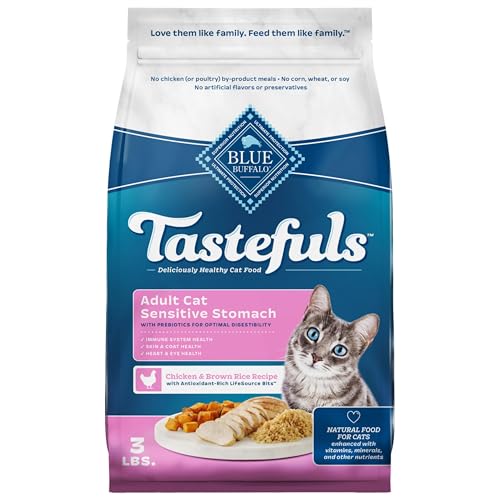
This Blue Buffalo option prioritizes gentle digestion with real chicken as the primary ingredient and prebiotic fiber to support stomach comfort. The formula is designed for sensitive stomachs while maintaining a balance of nutrients to support immune health via LifeSource Bits and fiber for digestion. It is a dry cat food choice suitable for daily meals.
Purina Pro Plan Sensitive Skin And Stomach Lamb & Rice — 7 lb

Purina Pro Plan Sensitive Skin and Stomach Lamb & Rice is crafted with easily digestible grains and real lamb as the first ingredient. The formula is fortified with guaranteed live probiotics to support both digestive and immune health. This option aims to reduce stomach upset while delivering ample protein for muscle maintenance.
Purina ONE Sensitive Stomach & Skin Dry Cat Food — 16 lb

Purina ONE Sensitive Stomach features real turkey as the first ingredient for protein, with an easily digestible formula and added prebiotic fiber. The food also includes calcium for dental health and four antioxidant sources to help support a robust immune system. It’s designed for cats with sensitive digestion and skin concerns.
Blue Buffalo Tastefuls Indoor Salmon & Brown Rice — 3-lb

This Blue Buffalo formula uses real salmon as the primary ingredient and is tailored for indoor cats. It includes natural fiber sources to support digestive health and coat condition, along with LifeSource Bits for immune support. The dry kibble format makes it a practical everyday option for homes with indoor cats prone to stomach upset.
Buying Guide: Key Considerations For Choosing Food For Cats With Sensitive Stomachs
- Protein source and digestibility: Look for high-quality, easily digestible proteins (e.g., real chicken or lamb) and limited grain content if your cat shows grain sensitivity.
- Fiber and prebiotics: A balance of soluble and insoluble fiber with prebiotics can promote healthier digestion and stool quality.
- Probiotics and immune support: Probiotics and antioxidant-rich ingredients help maintain gut and overall health, especially in adults and seniors.
- Wet vs. dry: Some cats prefer wet food for easier chewing and hydration; others thrive on dry diets with added moisture via water or canned toppers. Consider your cat’s preferences and hydration needs.
- Feeding goals by age and condition: Senior cats, kittens, and adult cats have different nutrient requirements. Choose a formula aligned with life stage while addressing sensitivity.
- Gradual transition: When switching foods, mix new and old diets gradually over 7–10 days to reduce GI upset.
- Allergies and intolerances: If symptoms persist (vomiting, diarrhea), consult a veterinarian; some cats may require limited-ingredient or novel-protein formulas.
- Flavor and texture variety: Mixing dry with wet options can help with picky eaters and hydration without compromising digestive health.
- Brand reliability: Choose brands with transparent labeling, guaranteed analysis, and evidence-based formulations.
- Portion control: Follow feeding guidelines and monitor weight and stool quality to adjust portions as needed.
If your cat continues to vomit or shows signs of ongoing digestive distress, a veterinary evaluation is recommended to rule out underlying medical conditions and to tailor a nutrition plan that best supports your cat’s gut health.