Protecting horses from flies starts with smart, stomach-safe fly control that works from the inside out. This guide highlights top feed-through fly control products designed to disrupt the fly life cycle in manure, reduce stable fly populations, and support a cleaner turnout area. All options below are EPA-approved or veterinarian-recommended where noted, and are chosen for palatability, safety, and effectiveness when used as directed. Use as part of an integrated pest management plan to maximize results.
Summary of Selected Products
| Product | Brand | Approx. Size | Key Benefit |
|---|---|---|---|
| SimpliFly Feed Through Fly Control | Farnam | 3.75 lbs | EPA-approved larvae targeting, daily palatable pellets |
| Formula 707 MultiFly Pellets | Formula 707 | 10 lbs | Novaluron insect growth regulator, safe for horses |
| SimpliFly Feed Through Fly Control | Farnam | 10 lbs | Extended supply, larval control in manure |
| Equitrol II Feed-Through | Farnam | 20 lbs | Easy-to-use, reduces fly development in manure |
| Formula 707 MultiFly Pellets | Formula 707 | 5 lbs | Palatable, safe fly population reduction |
Farnam SimpliFly Feed Through Fly Control (3.75 Lbs)
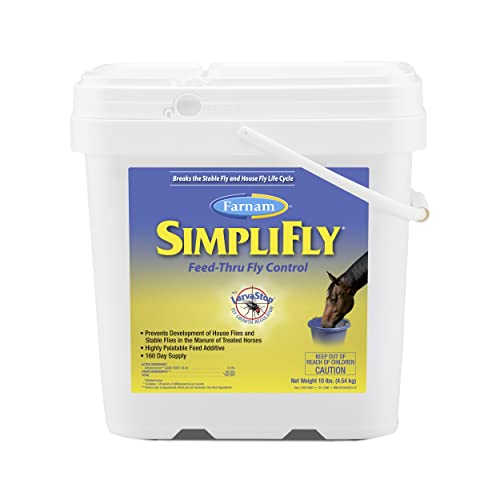
SimpliFly works by targeting larvae in manure, interrupting the fly life cycle before adult flies emerge. The EPA-approved larvicide is designed to reduce stable fly populations when fed daily. The pellets are formulated to be palatable and easily mixed with regular grain, minimizing changes to your horse’s feeding routine. The product has a long-standing track record with horse owners and veterinarians, reflecting trusted performance for over two decades.
Key attributes include a veterinary-recommended feed-through approach, safe use across horses of all ages, and a daily pellet format that avoids messy sprays or complicated applications. Regular, consistent administration is essential for maintaining fly suppression and supporting a cleaner, healthier stabling environment.
Formula 707 MultiFly Feed-Thru Pellets (10 Lbs)

Formula 707 MultiFly Pellets use Novaluron, an insect growth regulator, to break the fly life cycle. This approach aims for near-total control by preventing larval development, resulting in significant population declines. The formula is described as non-organophosphate and safe for horses, with palatable alfalfa and wheat middling base to encourage daily consumption. The 10 lb bag provides a substantial supply for larger barns or seasons with higher fly pressure.
Farnam SimpliFly Feed Through Fly Control (3.75 Lbs) – EPA-Approved

This entry emphasizes EPA-approval and daily palatability, ensuring horses readily consume the pellets when mixed with feed. As with all SimpliFly products, the mechanism focuses on preventing fly larvae from maturing in manure, reducing populations over time with consistent use. The product is positioned as a practical, veterinarian-backed option for ongoing prevention as part of integrated pest management.
Farnam Equitrol II Feed-Through Fly Control (20 Lbs)

Equitrol II provides a high-capacity option for one horse, delivering more than 320 days of supply per bucket. The feed-through additive is designed to prevent the development of house and stable flies in manure, complementing routine pest management. It features a simple, easy-to-use format that blends with daily feed, supporting consistent administration and broad-spectrum fly suppression in the horse’s environment.
Formula 707 MultiFly Pellets (5 Lbs)

This smaller bag option mirrors the larger 10 lb formula with the same active ingredient, Novaluron, offering a compact alternative for smaller barns or seasonal deployment. The pellets are designed to be palatable to horses and easily integrated into daily rations, ensuring consistent consumption without requiring changes to feeding routines. The product is positioned as a cost-efficient choice for effective fly population reduction.
Buying Guide: Key Considerations for Choosing Feed-Through Fly Control
Choosing the right feed-through fly control involves balancing safety, efficacy, palatability, and practicality. Consider these factors when evaluating options:
- Active ingredient and mode of action: Insect growth regulators (like Novaluron) disrupt the life cycle at the larval stage, helping to prevent adult flies. EPA approvals or veterinary recommendations indicate a higher likelihood of verified safety and effectiveness.
- Palatability and feed compatibility: Pellets should mix easily with regular grain and be readily accepted by most horses. Palatability reduces the risk of underdosing due to refusal.
- Feeding rate and duration: Some products provide long-term coverage (days to months), while others require daily administration for sustained impact. Confirm the feeding schedule aligns with barn routines.
- Supply size and cost-efficiency: Large bags or buckets may offer better value for larger stables. Consider your herd size and fly season length when selecting quantity.
- Safety and suitability: Verify that the product is appropriate for your horse’s age and health status. Avoid organophosphate-based products when possible, opting for non-toxic or safer formulations where available.
- Integration with other control methods: Feed-through products work best as part of a broader program, including manure management, stable cleanliness, and possibly refuges or screens to limit fly breeding.
- Ease of use: Simplicity in administration encourages adherence. Pellets that blend with feed and require no additional equipment are typically easier to manage.
For barn managers, matching the product choice to the barn’s size, fly pressure, and feeding routines is essential. Regular monitoring of fly activity and manure handling practices helps determine whether to continue, adjust, or switch products to maintain optimal control.