Choosing the right nutrition for a Rottweiler puppy supports healthy growth, strong joints, and robust energy levels. This guide highlights five dog foods commonly recommended for Rottweiler puppies, along with essential supplements and formulation notes. Each product section provides an objective snapshot of its nutritional approach, so you can compare options side by side and select the best fit for your puppy’s age, weight, and activity level.
| Product | Brand | Key Focus |
|---|---|---|
| Royal Canin Breed Health Nutrition Rottweiler Puppy Dry Dog Food, 30 lb Bag | ROYAL CANIN | Purebred-rottweiler puppy nutrition; specialized kibble; immune support |
| Blue Buffalo Life Protection Formula Puppy Dry Dog Food | Blue Buffalo | Real chicken first; DHA & ARA for cognitive health |
| Bully Max Puppy Food 24/14 | Bully Max | High protein growth formula; energy-dense; gut & immune support |
| VICTOR Super Premium Dog Food – High Protein Grain Free Active | VICTOR | Grain-free, high protein for active puppies |
| Bully Max Wet Puppy Food – Dehydrated, High Protein | Bully Max | Dehydrated wet option; easy hydration; protein-forward |
Note: This selection focuses on puppy-friendly options with strong protein foundations, balanced fats, and ingredients aimed at supporting growth and joint health in large-breed puppies like Rottweilers.
Royal Canin Rottweiler Puppy Dry Food
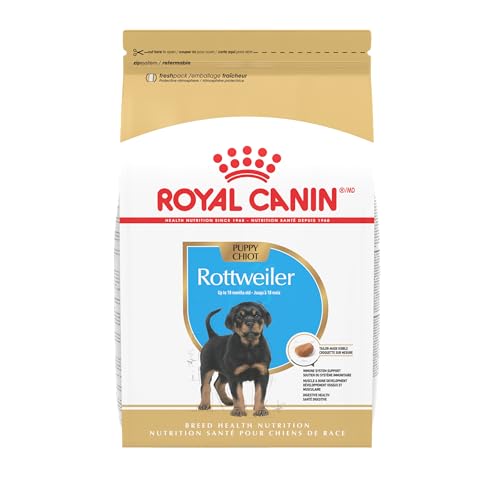
Formulated for purebred Rottweiler puppies from 8 weeks to 18 months, this formula emphasizes specialized kibble designed for large-breed puppies to pick up and chew easily. It includes an exclusive antioxidant complex with vitamin E to support immune development during puppyhood. The product concentrates on tailored support for growth, body condition, and healthy digestion in early life stages.
Blue Buffalo Life Protection Puppy

Blue Buffalo Life Protection Formula Puppy provides DHA and ARA to support cognitive development and retinal health, with real chicken as the main ingredient. It excludes poultry by-product meals and common fillers, offering a natural, premium option for puppies building lean muscle and steady energy as they grow into large breeds.
Bully Max 24/14 Puppy Food

This formula emphasizes a 24% protein and 14% fat profile, delivering energy with 419 calories per cup. It includes postbiotics for gut health, vitamins, and omega fatty acids to support skin, coat, and immune function. Suitable for growing puppies across breeds, it’s designed to promote robust growth and balanced development in large-breed puppies like Rottweilers.
VICTOR High Protein Grain Free Active Puppy Kibble

VICTOR’s grain-free, 33% protein kibble offers a high-protein option for active puppies, featuring beef, pork, and fish meals. The formula targets muscle development and energy needs without grains, appealing to dogs with sensitivities. It’s positioned for large-breed puppies requiring sustained activity and growth support.
Bully Max Wet Puppy Food

This dehydrated wet formula becomes a soft, protein-rich meal when prepared with water. It supports puppies of various sizes, including large breeds, with a focus on premium ingredients and a high protein profile to aid growth, coat health, and overall vitality in the early stages of life.
Buying Guide: Key Purchase Considerations
Protein quality and amount: Puppies need higher protein to support growth. Look for named animal protein sources (such as chicken, beef, or fish) and a protein percentage aligned with breed size and energy needs.
Calorie density and feeding guidance: Large-breed puppies require nutrient-dense foods to fuel growth while preventing overgrowth that stresses joints. Check calories per cup and estimated feeding ranges by weight.
Joint and immune support: Many large-breed formulas include joint-support ingredients (glucosamine, chondroitin) and antioxidants (vitamin E, selenium) to support developing joints and immune function.
Digestibility and palatability: Puppies may have sensitive stomachs. Grain-free options or recipes with easily digestible carbohydrates can help some dogs, while others tolerate a balanced blend of grains well.
Kibble size and texture: For large breeds, a kibble designed to be easily picked up and chewed can reduce feeding frustration and promote proper chewing. For fussy eaters, consider palatability and texture variety.
Allergen considerations and ingredients: If your puppy has known sensitivities, review ingredients for potential allergens (grains, certain proteins, artificial additives).
Whole-food and additive-free options: Some owners prefer foods with recognizable whole ingredients and fewer artificial flavors or preservatives. Compare certifications and feeding guidelines to ensure alignment with your puppy’s needs.