Red-footed tortoises require reliable UVB exposure to synthesize vitamin D3, support calcium absorption, and promote healthy activity. The right UVB bulb combines stable output, safe UV levels, and durable construction suited for indoor habitats. This guide reviews five popular UVB lighting options, highlighting their output, longevity, and suitability for red-footed tortoises in home terrariums.
| Product | Brand | UVB Output | Wattage | Notes |
|---|---|---|---|---|
| Pawfly UVB Light for Reptiles | Pawfly | UVB 5.0; UVA spectrum | 3 W | Long-lasting, energy-efficient; aluminum housing |
| LUCKY HERP UVA UVB Reptile Light 10.0 | LUCKY HERP | UVB 10.0; UVA | 23 W | Low degradation; high CRI; long UVB life |
| MRREPTILE UVB Reptile Lamp Light | MRREPTILE | UVB 10.0; UVA | 24 W | Designed for tropical reptiles and tortoises |
| GREENPAW UVB Reptile Light, 5.0 | GREENPAW | UVB 5.0; UVA | 15 W | Balanced spectrum; 10% UVB / 30% UVA output |
| DOMICA Dimmable Reptile Heat Lamp | DOMICA | UVB included with heat lamp | 50 W | Dimmable with timer; 360° clip; heat distribution |
Below are five detailed product segments to help you compare features, performance, and suitability for red-footed tortoise care in Mediterranean and tropical terrariums.
Pawfly UVB Light For Reptiles

The Pawfly UVB Light is a compact, energy-efficient 3-watt LED lamp designed for small terrariums. It uses optimized LED beads in a sturdy aluminum housing to deliver durable UVB and UVA exposure, with high heat dissipation for reliable performance. The lamp is rated for up to 20,000 hours, offering a long operational life that reduces bulb changes over time. It produces a daylight spectrum around 6000K with a high color rendering index (>90), which helps keep reptile colors vivid while supporting vitamin D3 synthesis through its UVB component. The device aims to provide a biologically relevant sunscape by balancing UVA and UVB while filtering out harmful UVC. This combination supports appetite, digestion, and natural activity cycles in red-footed tortoises and other desert-dwelling species.
LUCKY HERP UVA UVB Reptile Light 10.0

The LUCKY HERP 10.0 UVB bulb is designed to simulate outdoor sunlight with a balanced output of 10% UVB and 30% UVA. It emphasizes low UVB degradation, offering up to a year of stable exposure before replacement is typically needed. The bulb’s higher color rendering index (CRI around 90%) makes reptile colors appear more natural, which helps keep tortoises visually monitored for health and well-being. The UVB output facilitates vitamin D3 production and calcium absorption, while UVA supports appetite, digestion, and exploration. This option is well-suited for mid-to-large terrariums that require consistent daytime simulation and extended bulb life.
MRREPTILE UVB Reptile Lamp Light

MRREPTILE’s UVB Reptile Lamp provides a full-spectrum 24-watt output with 10.0 UVB and UVA. This bulb targets a broad range of reptiles, including red-footed tortoises, and is marketed as a long-lasting option designed for tropical environments. The product emphasizes its role in promoting calcium absorption via D3 synthesis and supporting a healthy metabolism through UVA exposure. The UVB portion is specifically aligned to maximize vitamin D3 synthesis without delivering excessive UV exposure, which can be a concern in smaller enclosures. The design supports varied terrarium setups and is suitable for bearded dragons, tortoises, turtles, and similar species.
KINDEEP 75W Reptile Heat Lamp Bulbs

The KINDEEP 75W Reptile Heat Lamp combines a daylight UVA exposure with an infrared basking heat component. This dual-function bulb reproduces day-night cycles by offering UVA for activity and appetite, plus heat to maintain the correct basking temperature. The kit is designed for a wide range of reptiles including tortoises, lizards, snakes, and bearded dragons. In addition to heat distribution, the bulb aims to minimize energy waste by focusing heat where it’s most needed, helping maintain stable terrarium temperatures without excessive power draw. A suitable choice when a terrarium requires both light and warmth in a single fixture.
GREENPAW UVB Reptile Light, 5.0 15W

GREENPAW’s 15-watt 5.0 UVB bulb provides a stable balance of UVB and UVA, designed for rainforest and tropical reptiles. It emits around 10% UVB and 30% UVA, facilitating vitamin D3 synthesis and calcium absorption while encouraging natural behaviors like foraging and sunbathing. The bulb’s compact spiral CFL design makes it easy to install in smaller enclosures and vivariums. With a high color rendering index, reptile colors appear more natural, aiding routine health checks and enrichment in red-footed tortoise habitats.
Abustle Pig 4 Pack UVA Infrared Reptile Heat Bulbs

Abustle Pig offers a four-pack of red infrared reptile heat bulbs designed for night heat and comfort. These bulbs provide warmth while delivering a small percentage of UV light to support metabolic activity and digestion. They are intended for terrariums and enclosures hosting reptiles and amphibians that require consistent warmth during cooler periods. The bulbs use a standard E26/E27 base for easy installation and offer a practical option for nocturnal heating without daytime light disruption. They complement daytime UVB lighting when used in combination with UVB sources for a complete lighting plan for red-footed tortoises.
DOMICA Dimmable Reptile Heat Lamp With Timer
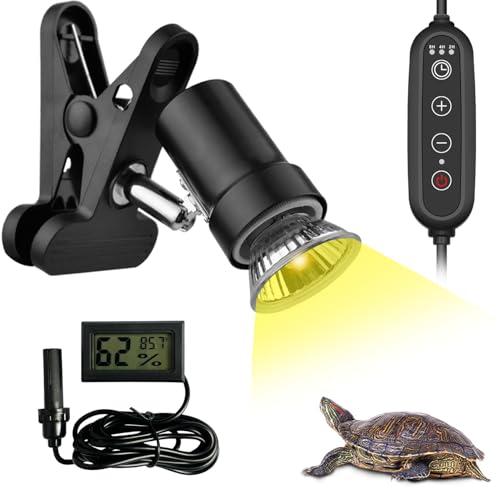
DOMICA’s dimmable heat lamp features a timer and 50W UVA/UVB-capable light. It’s designed to emulate natural sun exposure while providing precise heat distribution. The product includes a robust aluminum alloy housing with a ceramic base, and safety guidelines to ensure proper mounting distance, caution during adjustments, and heat management. The 360° rotatable clip allows flexible positioning to maximize heat coverage on tortoise basking zones. This option is useful for maintaining stable basking temperatures and controlled UV exposure in larger enclosures.
Buying Guide: Key Purchase Considerations For Red-Footed Tortoises
- UVB intensity and spectrum: Red-footed tortoises benefit from UVB in a range that supports vitamin D3 synthesis. A balanced mix of UVA helps appetite and activity. Check product labels for UVB ratings (e.g., 5.0, 10.0) and UVA presence.
- Output stability: Look for bulbs with low degradation over time to minimize frequent replacements and ensure consistent vitamin D3 production.
- Wattage and enclosure size: Smaller terrariums may only need 5–15W UVB bulbs, while larger enclosures benefit from higher-output fixtures or supplemental lamps. Ensure the distance between the lamp and the basking area is within the manufacturer’s safety guidelines.
- Heat vs. light: Some bulbs combine heat and light (UVA/UVB) in one fixture, which can simplify setup but requires careful temperature management to prevent overheating.
- Durability and installation: Durable housings, easy mounting, and compatibility with standard bases (E26/E27) simplify maintenance and replacements.
- Duty cycle and safety: Avoid UVC. Ensure appropriate shading or UV shields to prevent excessive exposure, and follow safety guidelines to protect eyes and skin.
- Lifecycle planning: Consider bulbs with longer lifespans, or plan for routine monitoring of UV output to maintain consistent exposure over time.
For optimal terrarium health, pair a reliable UVB source with a proper basking location and temperature gradient. Regularly observe your tortoise’s behavior and shell health to assess whether lighting and heat are meeting needs. When combining products, ensure you provide a consistent day-night cycle and avoid overcrowding the heat and light sources in a small space. A well-rounded setup supports calcium metabolism, appetite, and natural activity in red-footed tortoises.